
Why Choose Handmade Art Over Mass Produced
Mitchell AdelmanTable of Contents
- The True Cost of Mass-Produced vs. Handmade Art
- Craftsmanship and Durability: Why Handmade Art Lasts
- The Human Touch: Emotional Connection and Individuality
- How to Choose Art for Your Walls: A Practical Guide
- The Importance of Supporting Independent Artists
- Sustainability and Ethical Consumption in Art
- Customization and Bespoke Options: Making It Yours
- Caring for Your Handmade Art: Maintenance Tips
- Frequently Asked Questions
Last Updated: September 16, 2026
The True Cost of Mass-Produced vs. Handmade Art
Why choose handmade art over mass produced? Because your money stays in a real person's hands, and the piece tends to outlast the trend that inspired it. This guide from Cerulean Rooster walks through what separates the two, from material quality to the quiet ways a one-of-a-kind piece pays you back.
What You're Actually Paying For
With mass-market art, most of your money covers manufacturing, shipping, warehousing, and retail markup. With artisan-made work, a larger share goes to the maker's time, materials, and skill.
Where the Money Actually Goes
Here's the line-item difference between a mass-produced print and a handmade piece, four buckets: materials, labor, overhead, and margin.
Mass-produced print:
- Materials: thin coated stock, dye-based inks, machine-cut mats, chosen for the lowest per-unit cost.
- Labor: spread across thousands of units, so each copy carries a tiny fraction of a worker's hour.
- Overhead: warehousing, freight, distribution, retail shelf space.
- Margin: stacked at multiple levels, manufacturer, distributor, retailer.
Handmade piece:
- Materials: cotton rag or archival paper, pigment inks, hand-cut mats, chosen for how they age, not how cheap they are.
- Labor: one artist's hours, start to finish, on your specific piece. A detailed portrait or commission can represent many hours of sketching, painting, and finishing.
- Overhead: a small studio, personal packing, a trip to the post office, no consolidated freight to hide behind.
- Margin: one maker, one sale, no middle layers.
Value Retention and Investment Potential
Original art and small-batch work hold value differently than mass-manufactured decor. A discontinued print run loses its context fast, while an original piece can appreciate as the artist's reputation develops. Nobody should buy art as a sure investment, but heirloom quality is real.
The Long Game: Cost Per Year of Ownership
Think in cost per year of ownership rather than cost at checkout. A mass-produced print that fades or feels dated in a couple of years gets replaced, and the replacement cost stacks up. A handmade piece made with archival materials is built to be lived with for decades, spread across that timeline, the upfront difference narrows.
Craftsmanship and Durability: Why Handmade Art Lasts
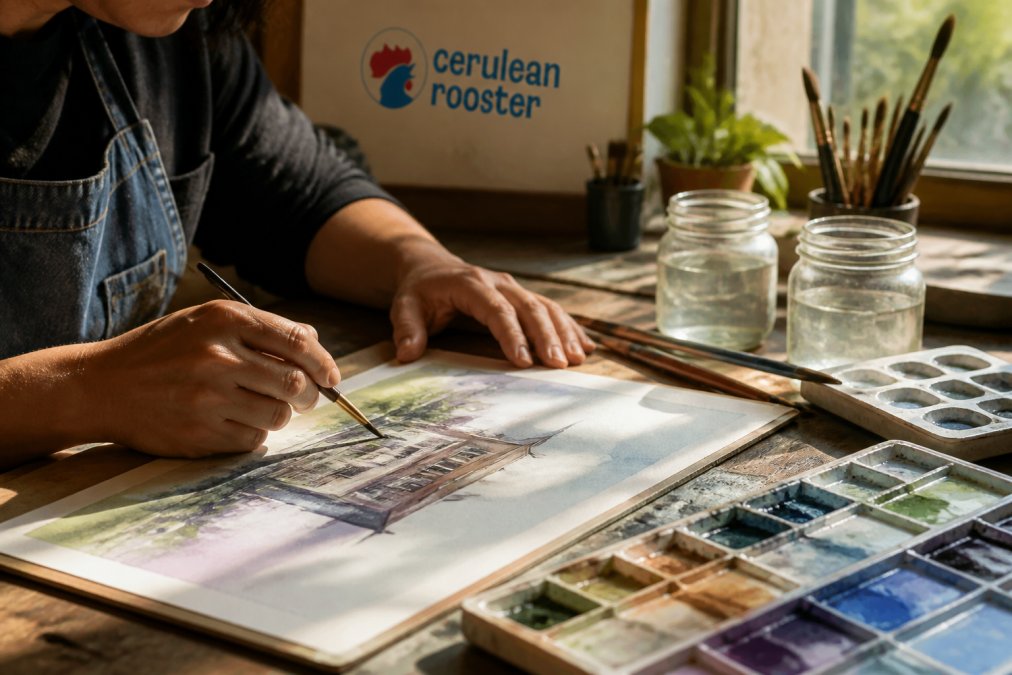
Handmade art lasts because the materials and the making are chosen for longevity rather than unit cost. Archival papers, pigment-based inks, and proper mounting resist fading and yellowing far better than the thin stock used in high-volume printing. Skill-based production is also why edges are clean and colors sit where the artist intended.
Material Quality and Skill-Based Production
Material quality is where the gap shows first. Cotton rag paper, pigment inks, and hand-finished edges behave differently over a decade than coated poster stock, you can feel it in the weight and tooth of the paper.
The Human Touch: Emotional Connection and Individuality
The human touch is the part no production line can replicate: small variations, deliberate choices, and the knowledge that one specific person made this one specific thing.
Why Handmade Art Feels More Personal
Individuality shows up in the details: a brushstroke heavier on one side, a color mixed by eye rather than pulled from a swatch library. These aren't flaws; they're the signature of artisan-made work. Cerulean Rooster is a family-run studio owned by two deaf brothers, an artist and an attorney, and every order is packed by hand, the human touch people mean when they say a piece feels alive.
How to Choose Art for Your Walls: A Practical Guide
Choosing art for your walls comes down to three things: scale, placement, and light.
Scale, Placement, and Lighting
A useful rule: art should take up roughly two-thirds to three-quarters of the width of the furniture below it. Hang the center at eye level, usually 57 to 60 inches from the floor ([What’s The Best Way to Hang a Picture?
Matching Art to Your Space and Mood
Match the piece to how the room is used, not just its color scheme. A quiet bedroom suits softer washes; a hallway or office can carry bolder linework. If you're unsure, buy the piece you keep coming back to, you'll live with it longer than a trend.
The Importance of Supporting Independent Artists
Supporting independent artists keeps money and creative control inside a small creative community rather than a distribution chain. When you buy from an independent maker, the artist decides what gets made, how it's priced, and how it's shipped.
Social Impact and Creative Community
The social impact is concrete. Independent artists reinvest in materials, studio space, and the next body of work. Buying from a deaf-owned, family-run studio also puts money behind makers often left out of mainstream retail shelves.
Sustainability and Ethical Consumption in Art
Ethical consumption in art starts with asking where materials come from and how much gets thrown away. Small-batch production generates far less waste than mass-manufacturing, because pieces are made to order rather than printed in bulk and discarded when they don't sell.
Environmental Footprint and Material Sourcing
A handmade piece's environmental footprint is usually smaller on the production side and larger on shipping, since there's no consolidated freight. Where it wins is waste: no overrun inventory, no unsold pallets headed for a landfill. If sustainability matters, ask about paper sourcing and whether the studio uses archival, responsibly sourced stock.
Customization and Bespoke Options: Making It Yours
Bespoke options are where handmade work pulls ahead of anything off a shelf. You can commission a piece sized to your wall, colored to your room, and built around a memory that matters to you. Mass-market decor can't, it's designed for the average buyer, not for you.
Commissioning Original Work
Commissioning is simpler than most people expect. Start with a clear brief: subject, size, and deadline. A good artist confirms scope before starting, then shares a sketch or early version for feedback. Turnaround varies by complexity, so ask upfront if you need it by a specific date.
What You Can Actually Customize
Customization isn't one thing, it's a menu, and knowing the menu helps you ask for what you want.
- Subject: A person, a pet, a home, a moment. People and pet portraits are among the most requested commissions because the subject is irreplaceable.
- Size and orientation: Portrait or landscape, small enough for a gallery wall or large enough to anchor a room.
- Palette: Colors pulled from your space, a favorite season, or a mood you want the piece to carry.
- Medium and finish: Watercolor, ink, mixed media, each behaves differently on the wall and over time.
- Format: Framed original, unframed print, greeting card, or sticker set built from the same artwork.
- Personal details: A name, a date, a phrase, a small symbol tucked into the composition.
How the Collaborative Process Works
A commission is a conversation, not a transaction. Here's the usual shape:
- Brief. You share the subject, size, intended space, and any deadline. Photos help, the more reference, the better the likeness.
- Scope confirmation. The artist confirms what's possible, what it will take, and when it will be ready. This is where you ask questions.
- Sketch or concept. You see an early version before the final piece is committed. Feedback here is cheap; feedback after the paint dries is not.
- Refinement. Colors, details, and composition get adjusted based on your notes.
- Final piece and delivery. The finished work is packed by hand and shipped to you.
Why This Is Different From 'Customizable' Mass-Market Products
Plenty of big retailers let you slap a name on a template or upload a photo to a print-on-demand service. That's personalization, not customization, the template is fixed; you're just filling a blank. A real commission lets you change the template itself: composition, palette, medium, mood.
Commissioning From a Deaf-Owned Studio
Cerulean Rooster is a family-run studio owned by two deaf brothers, an artist and an attorney, and expressive art is how we communicate. That shapes how commissions work here. Every card, sticker, people and pet portrait, and custom piece is made by hand, with the attention that comes from treating the work as a form of speech rather than a product.
Questions to Ask Before You Commission
- What's the timeline, and what happens if I need it by a specific date?
- How many rounds of feedback are included?
- What's the medium, and how will it age?
- Can I see the sketch before the final piece is started?
- What's the return or revision policy if something isn't right?
Asking these upfront keeps the process smooth and makes sure the finished piece is something you'll want on your wall for years.
Caring for Your Handmade Art: Maintenance Tips
Handmade art stays in good condition with very little effort if you handle it correctly from day one. Most damage comes from sunlight, moisture, and touching the surface, not from age.
- Frame behind UV-filtering glass or acrylic
- Hang away from direct sun and heat sources
- Keep humidity steady; avoid bathrooms and kitchens
- Handle by the frame or edges, never the painted surface
- Dust with a dry, soft brush, never a wet cloth
- Store unframed work flat, between acid-free sheets
Frequently Asked Questions
What are the primary benefits of buying handmade art?
Handmade art offers individuality, durability, and emotional connection that mass-produced items cannot match. Each piece is one-of-a-kind, created with skill-based production methods that often use higher-quality materials. You also support independent artists and small businesses, which keeps creative communities thriving. Plus, handmade art often retains or increases in value over time, making it a thoughtful investment.
How does handmade art differ from mass-produced decor?
Handmade art is created by individual artists, often using traditional techniques and premium materials, while mass-produced decor is manufactured in large quantities with standardized designs. Handmade pieces have unique charm, slight variations, and a human touch that mass-market items lack. They also tend to be more durable and carry a story, whereas mass-produced decor is often disposable and generic.
How can you tell if an art piece is truly handmade?
Look for signs of hand-finished details like brushstrokes, slight irregularities, or signatures. Ask about the artist and production process. Truly handmade art often comes with a certificate of authenticity or a story behind its creation. If you're buying online, check for close-up photos and descriptions that mention materials and techniques. Small-batch producers are usually transparent about their methods.
Is handmade art more sustainable than mass-produced items?
Yes, handmade art typically has a smaller environmental footprint. Artisans often use locally sourced, eco-friendly materials and produce in small batches, reducing waste and energy consumption. Mass-manufacturing relies on resource-intensive processes and long supply chains. Choosing handmade supports sustainable practices and ethical consumption, as many independent artists prioritize environmental responsibility.
Buying art is a small daily decision with a long tail. The piece you hang this year is the piece you'll look at every morning for the next ten. At Cerulean Rooster, we're a deaf-owned, family-run studio where two brothers make original art and goods, and every order is packed by hand in our small studio. If you want work that feels human and expressive, explore our original pieces and commissions, and bring something one-of-a-kind into your space.
Shop All