
How to Verify Handmade Art Quality
Mitchell AdelmanTable of Contents
- What You'll Need Before You Start
- How to Verify Handmade Art Quality Through Physical Inspection
- Signs of Original Handmade Art You Can Spot Immediately
- How to Spot Mass-Produced Art and Reproductions
- How to Evaluate Art Materials for Quality
- Researching Artist Background and Provenance
- Documentation, Certificates, and Return Protections
- Common Mistakes to Avoid When Verifying Art
Last Updated: August 24, 2026
What You'll Need Before You Start
Gather a magnifying glass or jeweler's loupe to inspect brushwork and surface details up close, plus a flashlight for angled light examination. For online evaluation, have your device ready to zoom in on high-resolution images. Good natural lighting is essential for in-person purchases, avoid fluorescent lights alone, as they distort colors and hide texture.
Research the artist beforehand if possible. Have a notebook ready to jot down questions about the piece's origin, materials, and creation process. At Cerulean Rooster, we believe understanding the story behind handmade art is just as important as examining its physical qualities. When you know the artist's background, you can better assess whether the work matches their typical style and technique.
Set realistic expectations: original handmade art isn't supposed to be perfect, it's supposed to be authentic. Slight variations, visible brushstrokes, and unique imperfections are actually signs of genuine craftsmanship, not flaws.
How to Verify Handmade Art Quality Through Physical Inspection
The most reliable way to verify handmade art quality starts with hands-on examination. When you can physically inspect a piece, you gain access to details that photos simply can't capture.
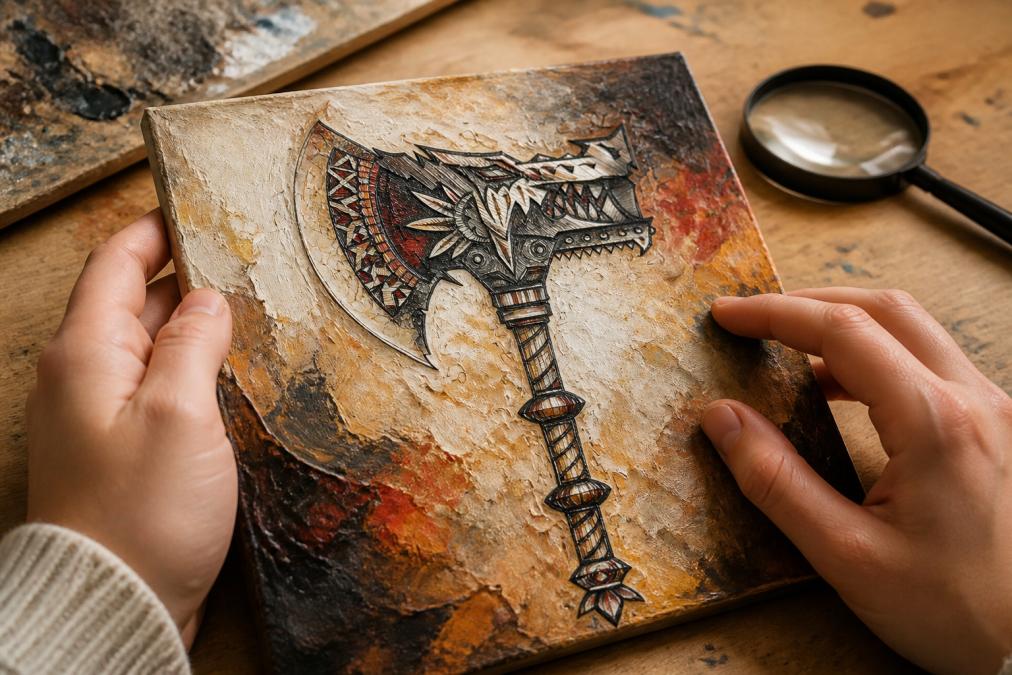
Examining brushwork and paint texture
Authentic handmade art shows visible evidence of the artist's hand at work. Look for brushstrokes that vary in pressure, direction, and width, real brushwork has an organic quality, not uniform or mechanical marks. Brushstrokes follow the contours of the subject naturally, with slight hesitations reflecting human decision-making in real time.
Run your fingers gently across the surface (if permitted). Original paintings have tactile texture you can feel. Impasto techniques create actual surface elevation, casting shadows when light hits the canvas at an angle. Mass-produced reproductions feel flat and uniform by comparison.
Look for layering evidence. Real paintings show where one color sits over another, with slight color shifts at the edges where layers meet. Pigment appears to have depth rather than sitting flat on the surface.
Checking canvas edges and back of the frame
Examine the canvas edges carefully. Original artwork shows raw or finished edges matching the front's construction. Stretcher bars should show wear patterns consistent with age and handling. Look for dust, debris, or discoloration suggesting the piece has been displayed over time.

Check whether the canvas is stapled or glued to the stretcher bars consistently. Professional artists typically use specific methods, usually evenly-spaced staples on the back. Reproductions often show inconsistent stapling that looks rushed or industrial.
The back of the frame tells a story. Original artwork often has labels, gallery stickers, or previous owner information adding to provenance. If the back is suspiciously clean and unmarked, that can be a red flag, though newer pieces naturally won't have much history.
Using angled light to detect surface elevation
Hold a strong light source at a very shallow angle to the painting's surface, almost parallel to the canvas. Move the light slowly across the piece.
Real handmade art casts shadows from surface texture and paint elevation. You'll see subtle shadows from brushstrokes, impasto, and canvas weave. Prints and reproductions appear flat under angled light, no shadows, no texture, no depth. Pay special attention to areas where the artist applied thicker paint; shadows should be consistent with the painting's lighting and composition.
Signs of Original Handmade Art You Can Spot Immediately
Certain characteristics reveal original work instantly. Combined, they create a strong case for authenticity.
Verifying artist signatures and markings
An artist's signature is one of the most direct authentication markers. Does it match the artist's known signature style? Research the artist's typical signature placement, size, and medium. Signatures on original work are usually applied with the same medium as the painting.
Look for consistency across multiple works by the same artist. Forged signatures often appear too perfect or inconsistent with known examples.

Check for signatures on the back or stretcher bars too. Many artists sign the back for additional authentication or add notes about materials or technique. Be aware that not all original art is signed, an unsigned piece isn't automatically inauthentic.
The bleed-through test for pigment penetration
Examine the back of the artwork to see if pigment has penetrated through the material. Real paint and ink soak into paper and canvas fibers over time, creating visible color on the back side.
Look for the bleed-through pattern matching the front design but appearing slightly softer and less defined. Reproductions and prints show no pigment penetration on the back or appear completely blank.
This test works particularly well for watercolor and ink pieces. For oil paintings on canvas, look instead for evidence that paint has bonded with the canvas fibers rather than sitting on top.
How to Spot Mass-Produced Art and Reproductions
Understanding what mass-produced art looks like helps you recognize authentic pieces by contrast. Mass production uses specific techniques designed for efficiency, not artistry.
Giclee prints are high-quality reproductions created by scanning an original artwork and printing it using inkjet technology on canvas or paper. While they have legitimate value, they're not handmade original art. The key difference: giclees are identical copies, while original handmade art is unique.
Look for uniformity. Mass-produced pieces show perfect consistency, every brushstroke in the same place, every color exactly the same shade, every edge precisely aligned. Real artists introduce subtle variations. No two hand-painted pieces are identical, even when an artist paints the same subject multiple times.
Print-on-canvas reproductions often have a plastic sheen or uniform gloss. The surface feels smooth and manufactured rather than organic. Examine the edges where the image meets the canvas; reproductions show clean, uniform edges, while original paintings often have slight variations where the artist worked near the frame.
Check the back for printing artifacts. Mass-produced pieces show evidence of industrial production, uniform stapling, barcode labels, manufacturing marks. Original artwork backs show individual variation and artist marks rather than factory consistency.
How to Evaluate Art Materials for Quality
The materials an artist chooses directly impact the artwork's longevity and visual quality. Understanding material quality helps you assess whether a piece represents genuine craftsmanship.
Analyzing material quality and canvas weave
Examine the canvas weave closely. Professional-grade canvas has a consistent, tight weave providing excellent paint adhesion (peer-reviewed research). Budget canvas shows looser weaves, thinner material, and sometimes visible flaws. Quality canvas feels sturdy and substantial, not flimsy.
Canvas weight matters significantly. Artists working with quality materials typically choose canvas that's 10-12 ounces or heavier. Lighter canvas feels thin and shows more movement when touched. Premium canvas has a smooth or slightly textured surface that painters prefer for detailed work.
Look at the stretcher bars supporting the canvas. Quality stretcher bars are made from solid wood (usually pine or spruce) with corner blocks for reinforcement. Cheap stretcher bars are thin, sometimes warped, and may lack corner reinforcement.
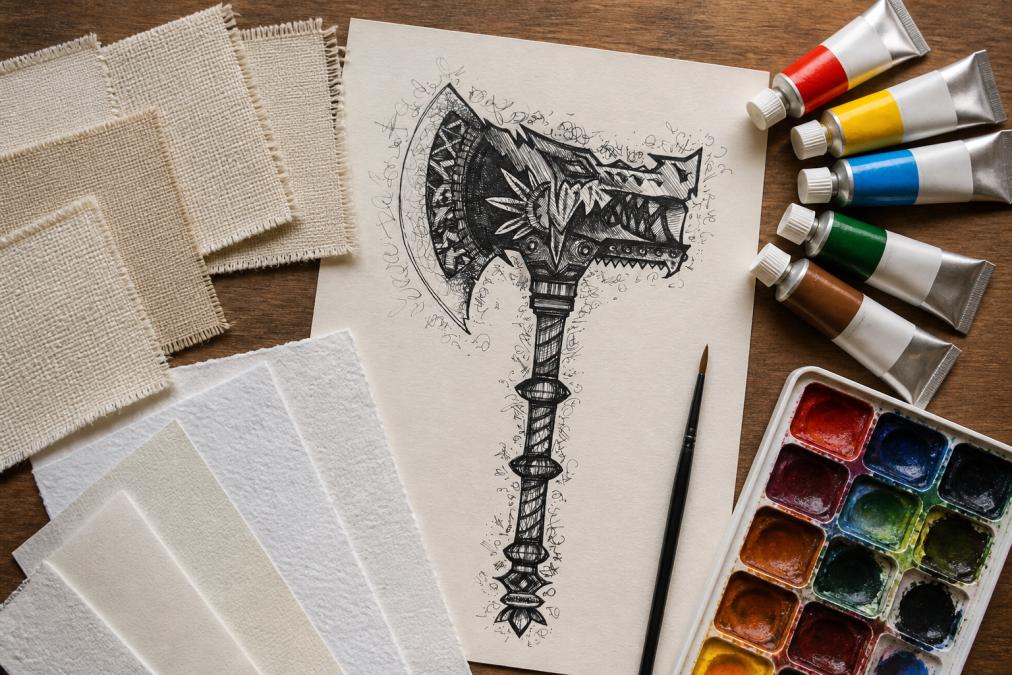
Understanding pigment and varnish quality
Quality pigments produce rich, vibrant colors that age beautifully. Look at color saturation and depth. Professional-grade pigments create colors that feel alive and dimensional. Budget pigments appear flat, muted, or artificial.
Examine how colors interact where they overlap. Quality pigments blend smoothly and create natural color transitions. Budget pigments sometimes show muddy mixing or harsh transitions.
Varnish protects oil paintings and adds depth to finished work. Quality varnish appears clear and enhances the painting without yellowing or becoming cloudy over time. Uneven varnishing suggests amateur work or poor-quality materials.
Ask about the specific pigments and materials used. Artists who work with quality materials are usually proud to discuss them. This conversation itself is revealing, genuine artists know their materials intimately.
Researching Artist Background and Provenance
The artist's background and the artwork's history add crucial context to your verification process. Provenance, the documented ownership history, significantly impacts both authenticity and value.
Start by researching the artist online. Look for their official website, social media presence, or gallery representation. Legitimate artists maintain some form of public presence. Check whether this specific piece appears in their portfolio or exhibition history.
Look for artist statements or interviews discussing their technique and materials. Does the artwork match what the artist says about their process? Inconsistencies raise questions.
Examine exhibition history if available. Has this piece been shown in galleries, museums, or legitimate art shows? Documented exhibition history strengthens authenticity claims.
Check for any available documentation about the piece's creation date, sale history, and previous owners. Each owner in the chain adds to the provenance record.
At Cerulean Rooster, we understand that every piece of handmade art carries a story. We create original illustrations and paintings with intention, and we're transparent about our process. When you purchase directly from artists or small studios like ours, you get the artist's story firsthand, no middlemen, no mystery about authenticity. Every card, sticker, people & pet portrait, and commission we create is expressively personal and thoughtful. Expressive art is our medium of communication, as we're deaf brothers, and that authenticity shines through in every piece we make.
Documentation, Certificates, and Return Protections
Professional artists and galleries often provide documentation of authenticity. Certificates of authenticity are common for significant pieces, though they vary in reliability. A legitimate certificate includes the artist's signature, a detailed description of the artwork, creation date, materials used, and sometimes a photograph.
Examine any provided documentation carefully. Legitimate certificates include specific details matching the actual artwork. Vague or generic certificates raise red flags.
Ask about the seller's return policy and guarantees. Reputable sellers stand behind their work. If a seller refuses to offer any recourse if the artwork proves inauthentic, that's a warning sign.
Request any accompanying documentation. Original artwork often comes with notes about the artist's process, materials used, or inspiration behind the piece. This documentation adds value and authenticity.

Common Mistakes to Avoid When Verifying Art
Don't rely on price alone as an authenticity marker. Expensive pieces aren't automatically authentic, and affordable pieces aren't automatically fake. A lesser-known artist creating stunning original work might price pieces affordably.
Avoid assuming perfection equals authenticity. Authentic handmade pieces show the artist's hand, including minor imperfections. Slight unevenness, visible brushstrokes, and subtle color variations are signs of genuine work, not defects.
Don't skip the research phase. Many people examine the physical artwork but never investigate the artist or provenance. Spend time researching the artist's background, previous work, and reputation.
Avoid making quick judgments based on single factors. Combine physical inspection, material analysis, artist research, and documentation review for comprehensive verification.
Don't ignore your instincts about the seller. If someone seems evasive about the artwork's origin, unwilling to answer questions, or pressuring you to buy quickly, those are red flags. Legitimate sellers are happy to discuss their work and answer detailed questions.
Verifying handmade art quality requires attention to detail, but it's absolutely worth the effort. When you invest in authentic original artwork, you're supporting genuine artists and bringing authentic creativity into your life. Handmade pieces from artists like those at Cerulean Rooster offer a connection that mass-produced alternatives simply cannot match. Taking time to verify quality ensures your investment reflects real artistry and authentic human expression.
=== FAQ ANSWERS (audit these too, same rules) ===
[1] Q: What are the visual signs of handmade art versus mass-produced prints? A: Handmade art shows visible brushstrokes, uneven pigment application, and natural texture variations across the surface. Mass-produced prints appear uniformly flat with perfect consistency and often have a glossy, plastic-like finish. Original pieces display unique imperfections and layering that reflect the artist's hand, while reproductions use mechanical processes that eliminate these tactile qualities and personal touches.
[2] Q: How do I distinguish between a digital reproduction and an original illustration? A: Original illustrations have tangible surface elevation, tactile brushwork, and pigment penetration you can feel. Digital reproductions printed on canvas (giclee prints) lack this depth and feel slick to the touch. Hold it under angled light; originals cast subtle shadows from brushwork, while reproductions appear flat.
[3] Q: Why does the paper or canvas weight matter in handmade art quality? A: Heavier, higher-quality paper and canvas resist warping, fading, and deterioration over time (peer-reviewed research). Artists who prioritize quality use archival-grade materials that preserve pigment and structure for decades. Thin, cheap paper buckles easily and yellows quickly, while lightweight canvas sags and stretches unevenly. When you evaluate art materials, weight and fiber content signal whether the artist invested in longevity or cut corners for mass production.
[4] Q: How can I verify the authenticity of an artist's signature? A: Authentic signatures are hand-applied with the same medium as the artwork (pen, brush, or pencil). Check for consistency with the artist's known signature style by researching their portfolio or asking for documentation. Signatures on original handmade art show natural ink flow and pressure variation, while printed or stamped signatures appear mechanically perfect and identical. Ask the artist or seller for provenance information and a certificate of authenticity when available.
Frequently Asked Questions
What are the visual signs of handmade art versus mass-produced prints?
Handmade art shows visible brushstrokes, uneven pigment application, and natural texture variations across the surface. Mass-produced prints appear uniformly flat with perfect consistency and often have a glossy, plastic-like finish. Original pieces display unique imperfections and layering that reflect the artist's hand, while reproductions use mechanical processes that eliminate these tactile qualities and personal touches.
How do I distinguish between a digital reproduction and an original illustration?
Original illustrations have tangible surface elevation, tactile brushwork, and pigment penetration you can feel. Digital reproductions printed on canvas (giclee prints) lack this depth and feel slick to the touch. Hold it under angled light; originals cast subtle shadows from brushwork, while reproductions appear flat.
Why does the paper or canvas weight matter in handmade art quality?
Heavier, higher-quality paper and canvas resist warping, fading, and deterioration over time. Artists who prioritize quality use archival-grade materials that preserve pigment and structure for decades. Thin, cheap paper buckles easily and yellows quickly, while lightweight canvas sags and stretches unevenly. When you evaluate art materials, weight and fiber content signal whether the artist invested in longevity or cut corners for mass production.
How can I verify the authenticity of an artist's signature?
Authentic signatures are hand-applied with the same medium as the artwork (pen, brush, or pencil). Check for consistency with the artist's known signature style by researching their portfolio or asking for documentation. Signatures on original handmade art show natural ink flow and pressure variation, while printed or stamped signatures appear mechanically perfect and identical. Ask the artist or seller for provenance information and a certificate of authenticity when available.
This article was written using GrandRanker