
How to Identify Authentic Handmade Stickers
Mitchell AdelmanTable of Contents
- Why Authentic Handmade Stickers Matter
- Handmade Sticker Quality Standards: What to Look For
- Visual Inspection Techniques for Identifying Authentic Stickers
- Identifying Professional vs Home-Printed Stickers
- Adhesive Backing and Finish Analysis
- Spotting Counterfeits: Red Flags and Detection Checklist
- Conclusion
Last Updated: August 16, 2026
Why Authentic Handmade Stickers Matter
When you're shopping for stickers online, you've probably noticed the huge range in quality. Some feel flimsy and peel off after a week. Others stick around for months, colors still vibrant, edges still crisp. The difference comes down to authenticity. Learning how to identify authentic handmade stickers protects you from wasting money on mass-produced knockoffs and ensures you're supporting real artists who pour genuine care into their work.

At Cerulean Rooster, we create every sticker by hand with intention. Our two deaf brothers, an artist and an attorney, design original illustrations and oversee every step of production. We hand-pack each order in our small studio, which means the sticker you receive carries the personal touch of someone who genuinely cares about quality. Expressive art is our medium of communication, and that intentionality shows in every product we make.
Counterfeit stickers often use cheaper adhesive backing, lower-grade vinyl, and printing techniques that produce pixelated or faded artwork. They fall apart faster and send your money to mass producers rather than the artists who deserve it. Understanding the markers of authenticity helps you make smarter purchasing decisions and connect with creators who genuinely value their craft.
Handmade Sticker Quality Standards: What to Look For
Authentic handmade stickers share specific characteristics that distinguish them from factory-produced alternatives. These standards reflect thoughtful material selection and precise manufacturing processes.
Print Resolution and Line Quality
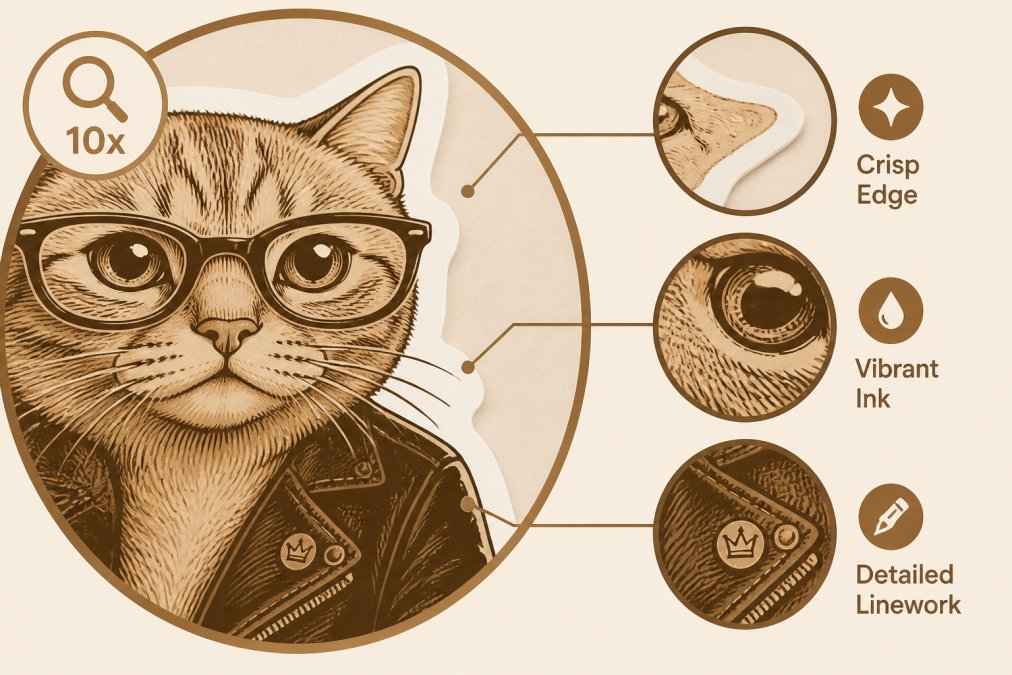
Professional handmade stickers typically print at 300 DPI or higher, which produces crisp, clean lines and prevents the fuzzy edges you see in lower-quality prints. When you examine a sticker up close, the linework should appear sharp and intentional, never blurry or jagged.
Look at fine details in the illustration. Thin lines should maintain consistent width without breaking apart. Small text, if present, should remain legible. These details require careful attention during the design phase and proper printer calibration during production. Authentic stickers use sufficient ink to create solid colors without appearing washed out or transparent.
Ink Saturation and Color Consistency
Color consistency across the entire sticker reveals whether the printing process was carefully controlled. Authentic handmade stickers maintain even ink coverage from edge to edge. Examine the sticker under different lighting conditions, the colors should remain consistent whether you're viewing it under bright light, natural daylight, or dim indoor lighting.
Rich, saturated colors indicate quality ink and proper application. When colors appear flat or washed out, it usually means the printer either used insufficient ink or the paper stock couldn't hold the ink properly. Authentic handmade stickers prioritize color quality because the visual impact of the artwork is central to the entire product.
Visual Inspection Techniques for Identifying Authentic Stickers
You don't need expensive equipment to examine sticker quality. A few simple techniques reveal whether you're holding something genuinely handmade or mass-produced.
Macro Inspection: What You'll See Up Close
Take a magnifying glass or use your smartphone's camera zoom to examine the sticker at 5x to 10x magnification. Authentic handmade stickers show clean, consistent printing with no visible halftone patterns or pixelation. Look at the edges where colors meet, professional printing creates sharp, defined boundaries with no color bleeding or white gaps.
Examine the texture of the ink itself. Quality printing produces a consistent, smooth finish. The surface should feel pleasant to touch, not rough or sticky.
Die-Cut and Kiss-Cut Edge Quality
Die-cutting removes the vinyl completely around the artwork shape, while kiss-cutting cuts through the vinyl but leaves the backing intact. Both methods, when done properly, create clean, precise edges.
Authentic die-cut stickers have edges that follow the artwork precisely with no jagged lines or rough spots. For kiss-cut stickers, the separation between sticker and backing should be clean, and the sticker should release cleanly without tearing. The consistency of the cut matters across the entire sticker, every edge should maintain the same quality and precision.

Identifying Professional vs Home-Printed Stickers
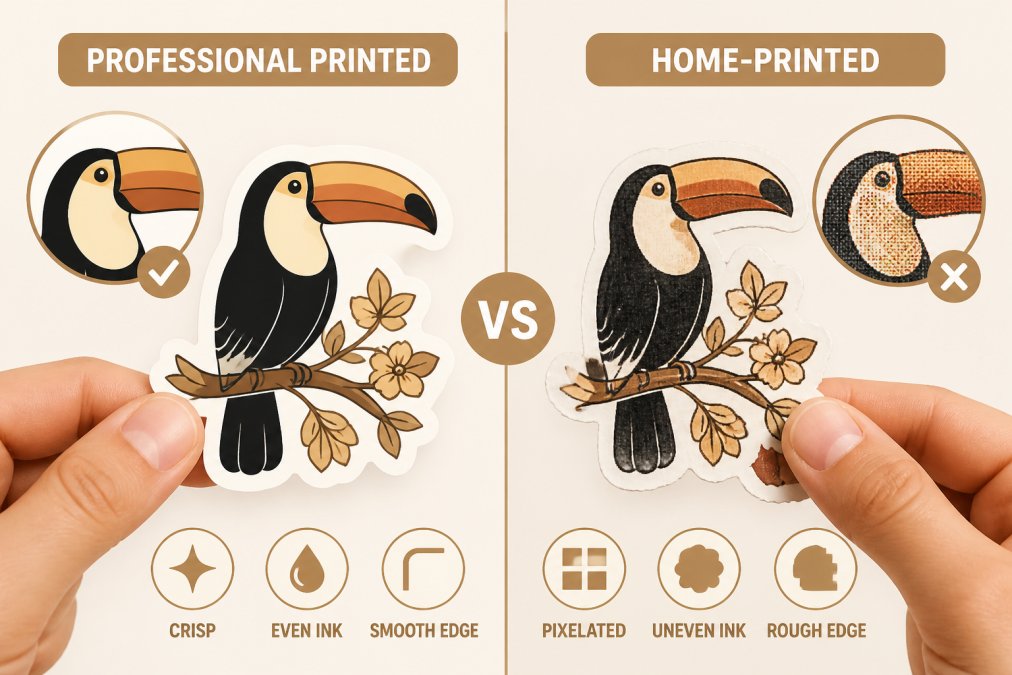
Professional stickers use either offset printing or digital printing, both producing consistent results across every sticker. Home printers cannot match commercial equipment, they produce visible dots under magnification and lack the color management systems that professional equipment uses.
Commercial printing inks are formulated for longevity, water resistance, and color stability. Home printer inks fade faster when exposed to sunlight and blur when wet. Professional printers use premium vinyl or specialized sticker paper that resists water and weathering, while home printers typically use standard paper or lower-grade vinyl that deteriorates faster.
Paper Stock and Backing Quality
Professional stickers use high-quality adhesive backing with proper parchment or kraft paper backing. The adhesive should stick firmly without damaging surfaces and maintain stickiness over months of use. Home-printed stickers often use generic adhesive sheets or lower-grade backing paper that becomes brittle or loses stickiness quickly.
Feel the backing paper texture. Quality backing paper has a smooth, consistent surface. When you peel a sticker, the backing should separate cleanly from the vinyl. The adhesive layer should be uniform across the entire sticker, if some areas stick better than others, it indicates uneven application or inconsistent material quality.
Adhesive Backing and Finish Analysis
Authentic handmade stickers use permanent or semi-permanent adhesive that bonds securely without damaging surfaces. Test the adhesive by applying the sticker to a test surface first, it should stick immediately and hold firmly when you try to peel it off gently, but release cleanly without leaving residue when you intentionally remove it.
The finish of the sticker surface affects both appearance and durability. Matte finishes provide a sophisticated look and reduce glare. Glossy finishes produce vibrant colors and feel smooth to the touch. The finish should feel consistent across the entire surface.
Quality vinyl stickers resist fading from UV exposure and maintain adhesion in temperature extremes. They resist water penetration, so rain or washing doesn't damage the artwork. Home-printed stickers on standard paper lack these properties and deteriorate quickly outdoors.
Spotting Counterfeits: Red Flags and Detection Checklist
Counterfeit stickers are increasingly common in online marketplaces. Knowing the red flags helps you avoid wasting money on fake products.
Common Counterfeit Markers
Pricing that seems too good to be true usually indicates counterfeit goods. Authentic handmade stickers cost more because quality materials and careful production require investment.
Packaging quality reveals a lot about authenticity. Counterfeit stickers often arrive in plain, unmarked envelopes or cheap plastic packaging. Authentic creators, especially those who hand-pack orders like Cerulean Rooster, use thoughtful packaging that reflects their commitment to quality.
The artwork itself sometimes shows signs of counterfeiting. If you notice the design appears elsewhere online under different creator names, that's a major red flag. Color inconsistency across multiple stickers from the same order also suggests counterfeiting, authentic production maintains strict color standards.
Aging Characteristics of Authentic vs Fake Stickers
Over time, the differences between authentic and counterfeit stickers become even more apparent. Authentic stickers age gracefully. The adhesive maintains its stickiness for months or years. The colors remain vibrant even after exposure to sunlight. The vinyl resists cracking or peeling.
Counterfeit stickers deteriorate rapidly. The adhesive becomes brittle within weeks and loses stickiness. The colors fade noticeably within a few months. The vinyl cracks or peels at the edges. Authentic stickers maintain their appearance even as they age, while counterfeit stickers show visible wear quickly.
Conclusion
Identifying authentic handmade stickers protects your investment and supports artists who genuinely care about their craft. The markers of authenticity, sharp print resolution, consistent ink saturation, clean die-cut edges, quality adhesive backing, and professional materials, all reflect deliberate choices made by creators committed to excellence.
When you choose authentic stickers from makers like Cerulean Rooster, you're getting hand-packed orders created with original illustrations, careful attention to every detail, and genuine artistry from deaf brothers who communicate through expressive design. Every sticker represents thoughtful production choices and materials selected for durability and visual impact.
Shop All at Cerulean Rooster to experience the difference that authentic handmade stickers bring to your daily life.
Frequently Asked Questions
What are the visual signs of a handmade sticker?
Authentic handmade stickers show crisp, consistent line work with no pixelation or halftone patterns visible to the naked eye. The edges are clean from die-cut or kiss-cut processes, the ink sits evenly on the vinyl without bleeding, and the overall design feels intentional rather than mass-produced. When you inspect one up close, you'll notice uniform color saturation and precise details that reflect the artist's hand-drawn original artwork.
How can I tell if a sticker was printed at home versus a professional shop?
Home-printed stickers typically show uneven ink coverage, visible pixelation or halftone dot patterns when magnified, and rough or unfinished edges. Professional printing produces smooth, consistent color saturation across the entire design, sharp dpi resolution (300+ dpi for quality), and precise die-cut or kiss-cut edges. Professional stickers also use high-quality vinyl and adhesive backing, while home prints often use standard printer paper or lower-grade materials that lack weather resistance and UV protection.
Why does adhesive backing matter when identifying authentic stickers?
The adhesive backing reveals a lot about a sticker's authenticity and quality. Real handmade stickers use permanent vinyl with professional-grade adhesive that sticks securely without leaving residue or peeling easily. Home-printed stickers often use temporary adhesive or parchment paper backing that feels flimsy or doesn't adhere properly. Quality adhesive also indicates the sticker is designed to last, authentic stickers maintain their bond over time, while counterfeits or low-quality reproductions fail quickly when exposed to moisture or temperature changes.
What makes handmade sticker quality standards different from mass-produced ones?
Handmade stickers prioritize artistic integrity and personal craftsmanship, starting with original hand-drawn artwork that's scanned at high resolution (300+ dpi minimum). The printing process uses professional digital or offset printing methods that ensure precise ink saturation and color fidelity. Each sticker is carefully inspected before packing, materials like vinyl and adhesive are selected for durability and weather resistance, and the overall finish, whether matte, glossy, or laminated, is intentionally chosen by the artist. Mass-produced stickers cut corners on materials, use lower-resolution printing, and prioritize speed over quality.
This article was written using GrandRanker