
How to Support Small Family-Run Studios
Mitchell AdelmanTable of Contents
- Why Supporting Small Family-Run Studios Matters
- Shop Thoughtfully and Invest in Quality
- How to Leave Effective Reviews for Small Shops
- How to Promote Small Businesses on Social Media
- Supporting Deaf-Owned Small Businesses
- Non-Monetary Ways to Help Studios Grow
- Build Relationships That Last
- Frequently Asked Questions
Last Updated: September 3, 2026
Why Supporting Small Family-Run Studios Matters
When you buy from a small family-run creative studio, you're not just purchasing a product, you're investing in someone's passion, livelihood, and artistic vision. Studios like Cerulean Rooster, a family-run creative studio proudly owned by two deaf brothers, pour their hearts into handmade art, illustrations, and goods designed to feel genuinely human and expressive.
Small family-run studios face real challenges that larger manufacturers don't. They juggle production, marketing, customer service, and financial management with limited resources. Unlike mass-production facilities, every piece that leaves a small studio carries the fingerprints, sometimes literally, of the people who made it. When you support these businesses, you're helping keep authentic, thoughtful creativity alive in a world increasingly dominated by mass-produced alternatives.
The economics matter too. Money spent at small family-run studios circulates directly back into local communities (sba.gov). It funds supplies, supports the artists' families, and enables them to keep creating rather than abandoning their craft for corporate jobs. Your purchase isn't anonymous, it's a direct vote for the kind of creative work you want to see more of.
Beyond the financial impact, supporting small family-run studios preserves something irreplaceable: the human connection between maker and buyer. When you know your order is being packed by hand, designed with intention, and created by real people who care about quality, the entire experience changes.
Shop Thoughtfully and Invest in Quality
The first and most direct way to support small family-run studios is to actually buy from them. But there's a difference between casual shopping and intentional support.
Thoughtful shopping means understanding what you're paying for. When you compare a handmade greeting card to a mass-produced one, you're not just comparing paper and ink, you're comparing the artist's time, skill, and creative energy. Handmade goods cost more because they should. The artist isn't cutting corners to maximize profit margins; they're prioritizing quality and originality.

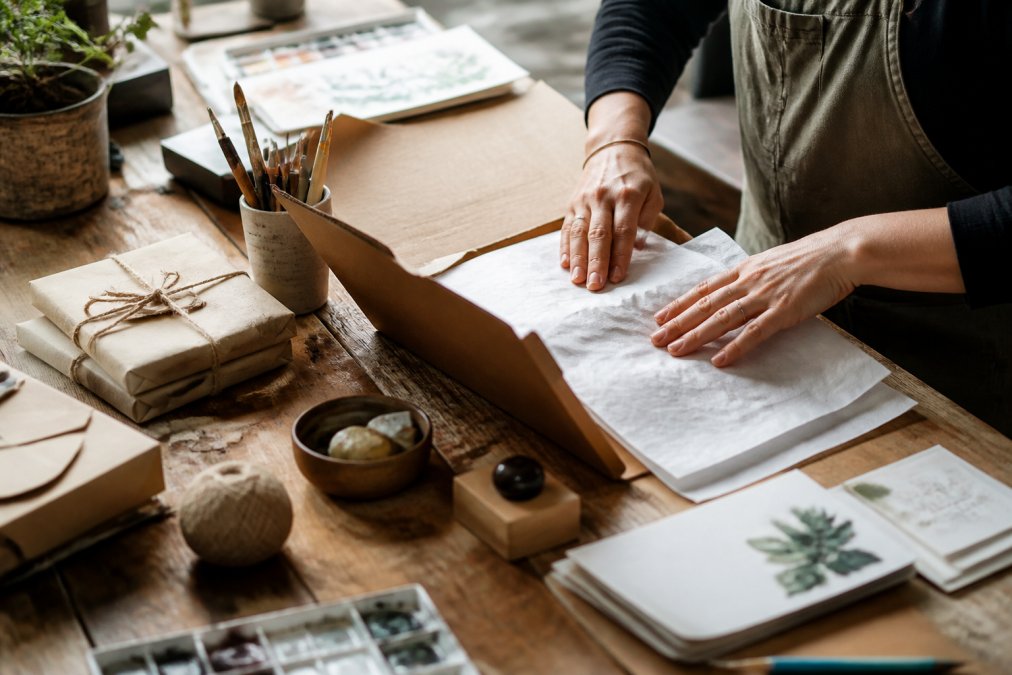
Look for studios that are transparent about their process. Cerulean Rooster, for example, emphasizes that every order is packed by hand in their small studio, ensuring a personal touch from their family to yours. When a studio is willing to explain how they work and why their prices are what they are, that's a signal they stand behind their craft.
Quality matters more than quantity. Instead of buying multiple cheap items, invest in one or two pieces you genuinely love from a small studio. A handmade card that resonates with you will be treasured far longer than a generic alternative. Original art pieces, custom commissions, and thoughtfully designed stickers become keepsakes, not disposable goods.
Consider custom work. Many small studios offer commissions for personalized pieces, whether that's custom illustrations, pet portraits, or bespoke designs. Custom work directly supports the artist's income and ensures they're creating something uniquely valuable for you. It also gives you insight into the artist's process and personality, deepening the connection between maker and buyer.
When you're ready to shop, visit the studio's website directly rather than through third-party marketplaces when possible. Small studios often keep a larger portion of revenue when they sell directly, and you'll get a clearer picture of their actual work and values.
How to Leave Effective Reviews for Small Shops
Reviews are free marketing gold for small family-run studios, but not all reviews are created equal. A thoughtful review can genuinely change someone's business trajectory.
An effective review for small shops goes beyond "great product." It tells a specific story. Instead of "I loved my order," try: "The greeting card arrived with hand-painted details I didn't expect. The colors are more vibrant in person than online, and the cardstock feels substantial. It made the perfect gift for my sister's birthday." Specific details help potential customers understand exactly what they're getting, and they help the studio understand what's working.
Mention the experience alongside the product. Did the package arrive quickly? Was there a handwritten note? Did the studio respond helpfully to questions? These human touches matter enormously for small businesses, and highlighting them in your review encourages other studios to maintain those standards.
Be honest about any limitations without being harsh. If something didn't meet your expectations, say so, but frame it constructively. "The colors were slightly different from the website photo, but still beautiful" is more helpful than "wrong colors." Small studios often read their reviews personally and use feedback to improve.
Post reviews on multiple platforms if you can. Leave feedback on the studio's website, social media, Google Business, and any marketplaces where you found them. Each review compounds the studio's visibility and credibility. A studio with dozens of detailed, positive reviews looks far more trustworthy to potential customers than one with no reviews at all.
Timing matters. Leave your review while the experience is fresh, ideally within a week of receiving your order. Early reviews are especially valuable because they help the studio build initial credibility.
How to Promote Small Businesses on Social Media
Social media is where small family-run studios can reach audiences they could never afford to reach through traditional advertising. When you share their work on your own platforms, you become an unpaid but invaluable marketer.
The simplest way is to tag the studio in posts featuring their products. If you buy a handmade card or custom illustration, take a photo and share it on Instagram, TikTok, or Facebook with the studio tagged. Include a genuine caption about why you love it. This exposes the studio to your followers and signals to algorithms that the studio's content is worth promoting.
Create user-generated content. Share behind-the-scenes stories about receiving your order, unboxing videos, or photos of how you're using the product. Small studios often repost customer content, it's authentic marketing they can't create themselves, and it builds community around their work.
Write about the studio in your stories or posts without needing to make a purchase. Share links to their website, recommend them to friends in comments, or write a post about why you support small family-run studios in general. This kind of organic promotion costs you nothing but has real impact.
Use hashtags strategically. When you post about a small studio, use relevant hashtags like #supportsmallbusiness, #handmadewithlove, #deafowned, and the studio's own branded hashtags. This helps their content reach people actively searching for small business support.
Engage with their content regularly. Like, comment, and share the studio's posts. Algorithms reward engagement, and consistent interaction from real people signals that the account is active and worth promoting (edu). Your comments might inspire others to check them out too.
Host or participate in social media challenges that highlight small businesses. Create a "small business spotlight" series, nominate studios for recognition, or participate in trends that celebrate independent makers. These challenges spread awareness while making small business support feel fun and communal.
Supporting Deaf-Owned Small Businesses
Deaf-owned small businesses face unique challenges that often go unrecognized (peer-reviewed research). Barriers to funding, communication gaps with hearing-centric suppliers, and underrepresentation in mainstream business networks all create obstacles that hearing business owners may never encounter.
When you support deaf-owned small businesses, you're actively working against systemic inequities. Cerulean Rooster, owned by two deaf brothers, demonstrates how deaf entrepreneurs can create thriving creative studios when given the opportunity. Yet many deaf-owned businesses struggle simply because they lack visibility and access to the networks that help other small businesses grow.
Actively seek out and amplify deaf-owned studios. Use search terms like "deaf-owned small business" or "deaf artist" to find creators you might otherwise miss. Follow deaf-owned accounts on social media, purchase from them, and tell others about them. Visibility is currency for marginalized business owners.
Understand that communication accessibility matters. If a deaf-owned studio uses video relay services, email, or other communication methods that differ from phone calls, respect those preferences. Accessible communication isn't an inconvenience, it's a basic requirement for equal participation in business.
Pay attention to how deaf-owned businesses market themselves. Many emphasize their deaf identity as part of their brand story and values, not as an afterthought. When you buy from a deaf-owned studio, you're often supporting not just an artist but a broader movement toward deaf economic independence and representation.
Advocate for deaf-owned businesses in your circles. Recommend them to friends, feature them in conversations about supporting small businesses, and challenge the assumption that deaf people can't run successful creative enterprises. Representation matters, and your voice amplifying deaf-owned studios helps shift cultural narratives.
Non-Monetary Ways to Help Studios Grow
Not everyone has money to spend, but there are countless ways to support small family-run studios without making a purchase.
Share your skills. If you're a graphic designer, accountant, social media manager, or writer, offer your expertise, even for just a few hours. Many small studios desperately need help with tasks outside their core creative work but can't afford to hire professionals. Your skills could be transformative.
Provide feedback and ideas. Small studio owners often work in isolation and welcome outside perspectives. If you follow a studio's work, comment thoughtfully on their designs, suggest ideas for products or services, or offer observations about what resonates with you. This kind of input helps studios understand their audience better.
Connect them with opportunities. Know someone looking for custom art? A business needing branded stickers? A friend who'd love a handmade gift? Make introductions. Referrals are invaluable for small businesses, and you don't need to spend money to generate them.
Advocate for fair practices. If you see a small studio being undercut by mass producers or treated unfairly by a platform, speak up. Leave comments defending their pricing, call out the value of handmade work, or report exploitative behavior. Public support matters.
Volunteer your time. Many small studios participate in local craft fairs, community events, or fundraisers. Offer to help set up, manage a booth, or promote the event. Your time is a genuine contribution that frees up the studio to focus on creating.
Amplify their mission. If a studio aligns with causes you care about, help spread that message. Share their values, participate in their community initiatives, or support their vision publicly. Small studios often have deeper missions than just selling products, help them tell that story.
Write about them. Start a blog, newsletter, or social media series featuring small studios. Create content that celebrates their work, tells their stories, and explains why supporting them matters. Content creators have outsized influence, and your platform, no matter how small, can introduce new audiences to studios that deserve attention.
Build Relationships That Last
The most sustainable way to support small family-run studios is to become a genuine part of their community, not just a one-time customer.
Return regularly. Make it a habit to check in on your favorite studios. See what they're creating, follow their journey, and buy again when something speaks to you. Repeat customers are the backbone of small business survival.
Communicate directly. If you love something a studio created, tell them. Send an email, leave a comment, or reach out through social media. Studio owners read these messages personally, and genuine appreciation fuels their creativity during difficult moments.
Be patient with imperfection. Small studios sometimes experience delays, occasional quality variations, or communication hiccups. They're run by real people juggling enormous workloads. When issues arise, approach them with grace and understanding. Most small business owners will move heaven and earth to make things right if you give them the chance.
Participate in their growth. If a studio launches a new product line, preorder it. If they're raising funds for equipment or expansion, support that effort. If they're experimenting with a new direction, buy from it and provide feedback. Your participation signals that their evolution matters to you.
Celebrate their wins. When a small studio reaches a milestone, their first year in business, their hundredth customer, a feature in a publication, acknowledge it. Your recognition validates their effort and reminds them why they chose to do this hard work.
Introduce them to others. The best long-term support is helping a studio grow their customer base organically. Recommend them to friends, family, and colleagues. Host a small gathering featuring their work. Write about them in your personal networks. Growth built on genuine relationships is far more stable than viral moments.
Remember that behind every small family-run studio are real people with hopes, fears, and dreams about their business. When you build a relationship with a studio, you're saying: "I see you. Your work matters. I'm invested in your success." That kind of support changes everything.
Supporting small family-run studios is one of the most meaningful ways to invest in authentic creativity and community. Whether you're purchasing handmade cards, commissioning custom art, or simply amplifying their work on social media, every action counts. At Cerulean Rooster, we understand the value of genuine connection and thoughtful support, it's what drives us to create art that feels human and expressive. When you choose to support small family-run studios, you're choosing to preserve the irreplaceable magic of handmade goods and the stories of the people behind them. Shop with intention, share generously, and build relationships that last.
Frequently Asked Questions
Why is it important to support small family-run studios?
Small family-run studios pour genuine passion into their work. When you support them, you're investing in artistry that comes from real people who care deeply about quality. Your purchase directly sustains creative families, keeps original art alive, and strengthens your local creative community. Unlike mass-produced alternatives, handmade goods from family studios carry authentic expression and thoughtfulness that mass manufacturing can't replicate.
How can I support deaf-owned small businesses?
Actively seek out and champion deaf-owned studios by shopping their products, sharing their work on social media, and leaving detailed reviews. Many deaf-owned creative businesses face additional barriers to visibility, so your word-of-mouth support is incredibly valuable. When you buy from studios like Cerulean Rooster, you're supporting entrepreneurship within the deaf community and helping prove that deaf-owned businesses deserve the same recognition and patronage as any other creative enterprise.
What are non-monetary ways to support small family studios?
Share their work on your social media, tag them in posts, write honest reviews on their website or platforms, attend studio events if available, and refer friends and family. Genuine word-of-mouth recommendations cost you nothing but mean everything to small studios. You can also engage with their content regularly, ask thoughtful questions about their creative process, and celebrate their milestones publicly. These actions build community and visibility that money alone cannot buy.
How do I know if a small studio's work is worth the investment?
Look for transparency about their process. Handmade studios like Cerulean Rooster openly share how pieces are created, whether they're original watercolors, hand-illustrated designs, or personally packed orders. Check their portfolio for consistency in quality and artistic vision. Read customer reviews that mention specific details about materials, colors, and the care taken in production. Visit their website to understand their story and values. When you see genuine craftsmanship and personal investment, the quality speaks for itself.
This article was written using GrandRanker