
How to Find Personalized Cards for Teachers: 2026 Guide
Mitchell AdelmanTable of Contents
- Start With the Teacher, Not the Card
- What Makes Personalized Cards for Teachers Feel Genuine
- Meaningful Teacher Appreciation Messages That Go Beyond "Thanks"
- Best Practices for Writing Teacher Appreciation Notes
- Where to Find Personalized Cards for Teachers
- Group Cards, Timing, and Eco-Friendly Touches
- Conclusion
- Frequently Asked Questions
Last Updated: September 13, 2026
Start With the Teacher, Not the Card
The best personalized cards for teachers start with a question about the person, not a template gallery. What does she laugh at? What does he collect?
This guide from Cerulean Rooster shows how to find personalized cards for teachers that feel made for one specific human, because they were. We're a family-run studio owned by two deaf brothers, and we build every card and sticker by hand, so we know how much the small details carry. Below: choosing a design, writing a real message, and timing it right.

The 5 strategies we cover have one thing in common: none of them start with the card aisle.
What Makes Personalized Cards for Teachers Feel Genuine
Genuine cards share three traits: they reference something real, match the recipient's personality, and carry a human mark, whether a handwritten line or an original illustration.
Store-bought cards fail at two of those three. A printed "Thanks for all you do" can go to anyone. A hand-painted watercolor with a note about the classroom hamster can only go to one person.
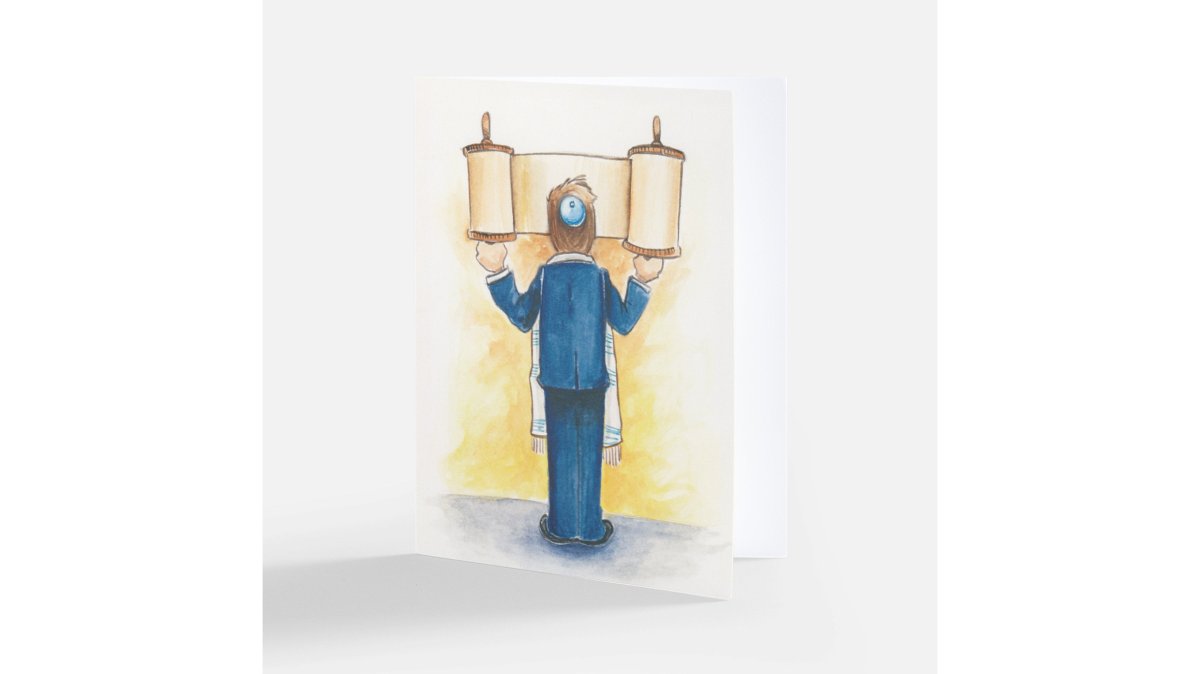
Matching the Design to Their Personality
Match the design to something you've actually observed. A science teacher with a tank of guppies gets an aquatic illustration. A reading teacher with a plant-covered windowsill gets something botanical. A coach who doodles play diagrams gets a bold, graphic layout.

A common mistake is picking the fanciest card instead of the most fitting one. Fancy reads as generic. Fitting reads as attention.
Why Handmade Teacher Thank You Cards Stand Out
Handmade teacher thank you cards carry evidence of a person behind them, and that's the whole point. An original illustration, an uneven edge, a note in real ink: each signals that someone spent time instead of money.
Teachers notice this because they do the same thing all year: making things by hand, cutting things out, writing names in the margins.
Meaningful Teacher Appreciation Messages That Go Beyond "Thanks"
Meaningful teacher appreciation messages name a specific moment, change, or habit. "Thank you" is a closing, not a message.
Most teacher cards fail here: the design gets all the attention and the message gets two words. Flip that ratio. A plain card with a real story beats a beautiful card with nothing inside.
Message Starters by Relationship Type
Use these as starting points, then swap in your own details.
For a current student writing to their teacher:
- "I used to hate [subject] until you explained [specific thing]."
- "You let me redo the test, and that changed how I felt about trying."
- "I still use the trick you taught us for [skill]."
For a parent writing on behalf of a child:
- "You noticed when [child] was struggling before we did."
- "The way you handled [situation] meant more to our family than you know."
- "Our kid talks about your class at dinner. Every night."
For a colleague or administrator:
- "You covered for me during [event], and I've never forgotten it."
- "Your [specific practice] changed how our whole team works."
- "You made the hard weeks survivable."
For a retiring teacher:
- "You taught [number] years of students, and this one still remembers [moment]."
- "Your classroom was the first place I felt good at something."
Best Practices for Writing Teacher Appreciation Notes
Strong notes follow the same rules as good teaching: be specific, brief, and honest.
- Name one moment. Vague praise slides off. A single memory sticks for years.
- Say what changed. "Because of you, I..." is the strongest sentence in any thank you note.
- Keep it short. Three to five sentences is plenty. Length dilutes.
- Write by hand if you can. Handwriting carries effort in a way print cannot.
- Skip the superlatives. "Best teacher ever" is a compliment. "You stayed after class to walk me through fractions" is proof.
A common mistake is waiting for the perfect words. Write the rough version first, then trim it. Most people overwrite by a third.
Where to Find Personalized Cards for Teachers
The best personalized cards for teachers come from small studios, local makers, and shops that let you customize the design, not just the name field. Where you look determines how much control you get.
The Four Sourcing Channels, Ranked by Customization Depth
1. Independent studios and maker shops. These offer the deepest customization: original illustration, color choice, message placement, and often a hand-painted or hand-drawn front. Turnaround is longer because a person is making the card, not pulling it from a bin. Go here when the card needs to reference something specific, like the classroom guppy tank.
2. Local makers and craft fairs. You can talk to the maker in person, feel the paper stock, and sometimes commission a one-off design. The trade-off is availability: a weekend-market maker may not take orders during the school week, and inventory is limited to what's on the table.
3. Print-on-demand and template platforms. Fast, cheap, and easy to order in bulk, but the design library is shared. If the only thing you change is the name, the card is labeled, not personalized. Best when you need twenty identical cards for a grade-level team and the message inside carries the personalization.
4. Big-box and grocery stores. Convenient for same-day pickup, but the selection is seasonal and generic. You're choosing from what's left on the rack, not what fits the teacher.
What to Check Before You Buy
| What to Check | Why It Matters | What to Look For |
|---|---|---|
| Original artwork | Signals a real artist, not a template | Hand-painted or hand-drawn designs, artist credited by name |
| Customization options | Lets you match the teacher's personality | Choice of illustration, color, message placement, not just a name field |
| Paper and print quality | Affects how the card feels and how long it lasts | Heavier card stock, matte or textured finish, no flimsy insert |
| Packing and turnaround | Tells you if a human handles your order | Hand-packed orders, clear timeframes, a real person answering questions |
| Envelope and extras | Small details that change the unboxing | Coordinating envelope, optional sticker or insert card |
A common pattern among disappointed buyers: they order from a platform that advertises "personalized" but only offers a text field. Before you check out, ask whether the illustration itself can change. If not, you're buying a template with your teacher's name on it.
How We Make Ours
Our own cards feature hand-painted designs by Stuart Adelman, with a card for nearly every occasion. [The Thank You Jar Card](https://www.ceruleanrooster.com/products/thank-you-jar) works especially well for teachers, thanks to its bright bouquet-in-a-jar illustration and friendly "Thank You" sticker. The Any 1 Card and 1 Sticker Bundle pairs a card with a vinyl sticker for a laptop or planner.

If you're buying for several teachers, the Four Seasons Greeting Card Bundle gives you four original hand-drawn cards with blank interiors, one per season, so you can spread your thank-yous across the year. We also take commissions for people and pet portraits, so the teacher's classroom pet or family dog can become the front of the card.
Group Cards, Timing, and Eco-Friendly Touches
Most guides stop at individual cards. The parts that trip people up are the ones nobody writes about: how to run a group card without it falling apart, when to send it, and how to choose paper and ink that don't undercut the sentiment.
How to Organize a Class-Wide or Group Card
Group cards work best when one person collects messages, sets a deadline, and assembles everything into a single card or booklet. Without a coordinator, they turn into a scattered text thread and never get finished.
A few etiquette points most guides skip:
- Name a coordinator and a backup. One person owns the card. The backup takes over if the coordinator gets sick or the deadline slips.
- Give contributors at least a week, and remind them two days before the deadline. Two weeks is safer for a whole class.
- Ask for messages of three sentences or fewer. Long entries push the card past what anyone will read, and they crowd out quieter contributors.
- Include everyone who interacts with the teacher, aides, substitutes, front-office staff, and specialist teachers.
- Offer a no-pressure opt-out. Some families can't contribute, and a group card shouldn't make that visible.
- Deliver the card privately, not in front of a class, unless you know the teacher enjoys that.
- Keep a digital copy of the messages so the teacher can reread them after the paper card goes into a drawer.
For a digital group greeting, the same rules apply: use a shared document or group card tool with a hard close time, and export the final messages into a single PDF or image so the teacher gets one artifact instead of twenty emails.
When to Send a Teacher Thank You Card
The end of the school year is the obvious moment, but also the most crowded (nea.org). Teacher appreciation week, winter break, and the last day before a long holiday all work, and your card stands out more when it isn't competing with thirty others.
A few timing patterns that tend to land well:
- Right after a specific win. A card that arrives the week after a hard unit, a successful concert, or a tough parent conference reads as noticed, not scheduled.
- At the start of a break, so the teacher opens it when they finally have a quiet moment.
- On a random Tuesday in the middle of a long stretch with no holiday in sight. That's when a card does the most emotional work.
- After a retirement announcement, if you want to be part of the send-off rather than one of the last notes to arrive.
If you're sending to several teachers, stagger the delivery. Four cards arriving on the same day from the same family reads as a checklist; four cards arriving across a semester reads as attention.
Eco-Friendly and Sustainable Card Options
Paper and ink choices are part of the message. A card that says "thank you for everything" on stock that will yellow in a year is a smaller gesture than one printed to last.
What to look for:
- Recycled or FSC-certified paper. FSC certification is a widely recognized standard for responsibly sourced wood fiber; recycled content reduces demand for new pulp (fsc.org).
- Soy-based or vegetable-based inks. These are a common alternative to petroleum-based inks and are easier to break down in commercial recycling streams.
- Minimal plastic packaging. A paper band or a compostable sleeve beats a plastic cellophane wrapper, and it photographs better too (the EPA).
- Blank interiors. A card the teacher can keep and reuse as a bookmark or a note card has a longer life than one with a printed message that only fits one occasion.
- Digital downloads skip shipping entirely, though they lose the handwritten touch. A good middle ground: a physical card on recycled stock, paired with a digital note for anyone who can't sign in person.
Conclusion
Finding a card that fits a teacher takes a little observation and honesty about what you remember. That's the whole method: start with the person, match the design, and write three real sentences.
At Cerulean Rooster, every card is original art, packed by hand in our small studio, and made by two deaf brothers who believe expressive work says things plain words can't. [Browse the full collection](https://www.ceruleanrooster.com/products/cards) and pick something that sounds like your teacher, not like a greeting card company. Shop All.
Frequently Asked Questions
Where can I find unique, artist-made cards for teachers?
Independent artist studios and small creative shops are your best bet for personalized cards that do not look mass-produced. Look for shops that show the actual artwork, list the materials, and let you add a name or short message. Cerulean Rooster, for example, is a deaf-owned family studio where every card is packed by hand. You can browse their cards collection to see original hand-painted designs made for real occasions, not generic templates.
What makes a teacher appreciation card feel truly personalized?
Specificity is what separates a memorable card from a forgettable one. Mention a moment you or your child actually experienced, like how the teacher stayed late to explain fractions or recommended a book that sparked a love of reading. Pair that memory with a design that matches their style, whether that is watercolor florals, a playful doodle, or something seasonal. Add their name and a handwritten note, and the card stops feeling like stationery and starts feeling like a keepsake.
Are handmade cards better than store-bought options for teachers?
Handmade cards carry a different kind of weight because each one involves a real person making a choice about the design, the paper, and the packaging. Store-bought cards can be lovely, but they are printed in bulk and often identical across thousands of households. A handmade teacher thank you card signals that you went out of your way. That effort is usually what teachers remember, more than the card itself.
Should I include a handwritten note in a personalized teacher card?
Yes, and it matters more than the printed design. Write two or three sentences in your own handwriting, even if it is messy. Name one specific thing the teacher did that helped, then say what changed because of it. Sign it with your name or your child's name and the date. A handwritten note turns a nice card into something a teacher might keep in a drawer for years.