
Best Greeting Cards for Non Art People
Mitchell AdelmanTable of Contents
- Why Greeting Cards Matter When You're Not an Art Person
- What Makes a Greeting Card Feel Personal Rather Than Generic
- How to Write a Meaningful Greeting Card Message
-
7 Best Greeting Cards That Work for Every Occasion
- 1. Gardening Cat with Glass of Wine Card (Birthdays & Just-Because)
- 2. Dog and Cat with Birthday Cupcakes Card (Kid-Friendly Birthdays)
- 3. Get Well Dog Card (Recovery & Support)
- 4. Graduation Card (Milestones & Achievements)
- 5. Thank You Jar Card (Gratitude & Appreciation)
- 6. Cat Punk Rock Band Card (Music Lovers & Bold Personalities)
- 7. Papa Bear Card (Father's Day & Playful Dads)
- Unique Handmade Greeting Cards for Birthdays
- How to Spot Quality Stationery Without Being an Expert
- Independent vs. Mass-Market Cards: What's the Real Difference
- Building Your Card Collection on a Budget
- Frequently Asked Questions
Last Updated: September 2, 2026
Why Greeting Cards Matter When You're Not an Art Person
Standing in a greeting card aisle feeling lost? You're not alone. But here's the thing: greeting cards don't have to be complicated. The real power of a greeting card isn't about appreciating fine art, it's about choosing something genuine enough to hand to someone you care about. A thoughtful card says "I took a moment to think about you," and that matters more than any artistic credential.
At Cerulean Rooster, we design greeting cards specifically for people who want to feel confident in their choice without needing an art degree. Our hand-illustrated designs skip the pretension and go straight to warmth, humor, and authentic connection. Every card is created by our two deaf brothers, one an artist, one an attorney, and packed by hand in our small studio. Expressive art is our medium of communication, and that personal touch transforms a simple card into something that actually lands.
What Makes a Greeting Card Feel Personal Rather Than Generic
The difference between a card that lands and one that gets thrown away comes down to one thing: does it feel like someone actually thought about the recipient?
Generic cards rely on mass-produced sentiments. They're safe, forgettable, and designed to appeal to everyone, which means they connect with no one. Personal cards have a point of view. They might be funny in a specific way, tender in an unexpected moment, or bold enough to stand out.
Look for cards with clear personality. Does the illustration feel hand-drawn by a real person with a particular style, or does it look templated (aiga.org)? Does the message sound like something an actual human would say, or like a committee trying not to offend anyone?
The best greeting cards for non-art people do the emotional heavy lifting for you. A thoughtful design paired with a simple, honest message creates something far more powerful than a blank canvas you're expected to fill. Look for distinctive typography, interesting paper texture, and illustrations that feel handmade rather than computer-generated. Independent creators tend to nail this because they're designing from genuine expression, not profit margins.
How to Write a Meaningful Greeting Card Message
The card you choose is only half the equation. The message you write inside is where the real connection happens.
Start by matching the card's tone. If you've picked a funny card, your message should follow that energy. If the card is tender, your message should be too.
Keep it specific. Reference something only you would know: a shared memory, an inside joke, a specific quality you admire. This is where non-art people often have an advantage, you're not trying to be poetic or clever, just honest.
The best messages are short. Three to five sentences is often enough (mla.org). One sentence can be perfect if it's the right one. Sign your name, always. A handwritten signature transforms the card from a product into a message from you.
7 Best Greeting Cards That Work for Every Occasion
When building a collection of greeting cards, having versatile designs on hand means you're never caught without something appropriate.
1. Gardening Cat with Glass of Wine Card (Birthdays & Just-Because)
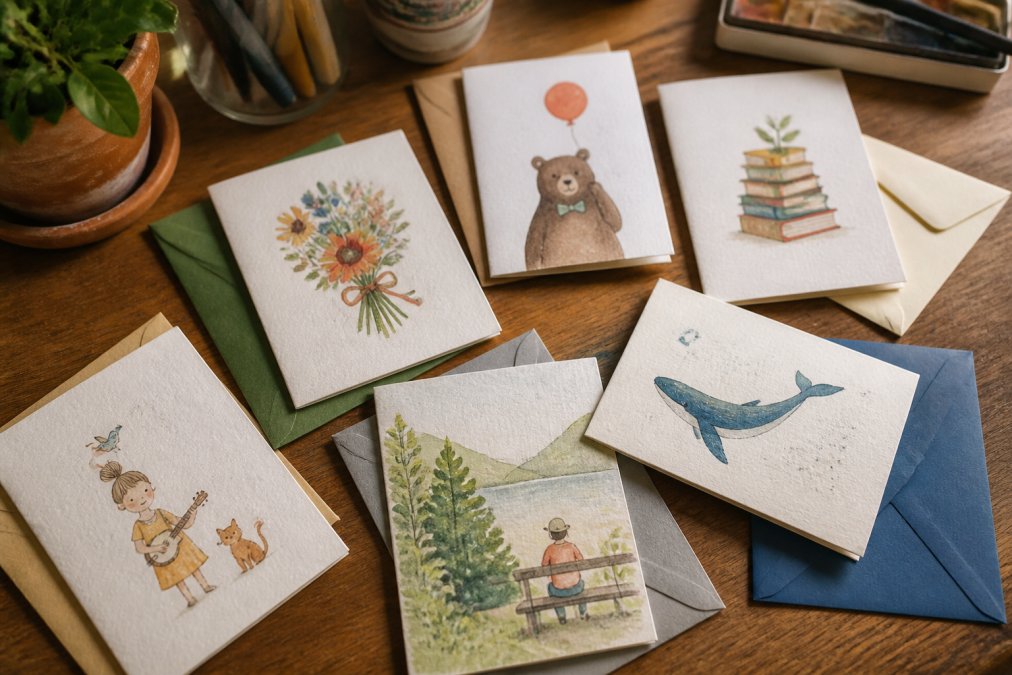
This whimsical card features a Siamese cat wearing an oversized gardener's hat, holding a potted flower and a generous glass of red wine. The illustration has personality without being try-hard. Gardening Cat with Glass of Wine Card works for birthdays, thank-yous, or "just because I'm thinking of you" moments. Best for anyone who appreciates life's simple pleasures.

2. Dog and Cat with Birthday Cupcakes Card (Kid-Friendly Birthdays)
A cheerful card featuring a cute dog and cat celebrating together, each holding their own birthday cupcake. Dog and Cat with Birthday Cupcakes Card bridges the gap between kid-appropriate and genuinely charming for adults. The shared celebration creates a sense of inclusion and friendship.
3. Get Well Dog Card (Recovery & Support)
A sweet little dog sporting a fore-leg cast offers heartfelt get-well wishes with gentle humor. Get Well Dog Card hits the balance perfectly, supportive without being maudlin. The hand-illustrated style makes it feel genuinely caring rather than mass-produced.

4. Graduation Card (Milestones & Achievements)
Dynamic graduates raise their arms as caps soar into the air, creating a scene full of pride and genuine possibility. Graduation Card acknowledges the accomplishment while feeling forward-looking. Works for high school, college, or any major educational milestone.

5. Thank You Jar Card (Gratitude & Appreciation)
A delightful bouquet-in-a-jar illustration makes this card stand out. Thank You Jar Card brings brightness and genuine joy to gratitude. The jar itself is a metaphor, you're collecting and preserving something valuable.
6. Cat Punk Rock Band Card (Music Lovers & Bold Personalities)
A high-energy card features a green, mohawked singer screaming into a mic while two badass cats back him up on bass and drums. Cat Punk Rock Band Card signals you actually know the recipient. Works for birthdays, congratulations, or "just because you're awesome" moments.
7. Papa Bear Card (Father's Day & Playful Dads)
A playful illustration of a lovable papa bear getting dressed up, perfect for the dad who's strong, sweet, and just a little goofy. Papa Bear Card finds the middle ground between serious and jokey. Works for Father's Day, birthdays, or just-because moments.
| Card | Best Occasion | Tone | Who It Works For |
|---|---|---|---|
| Gardening Cat | Birthdays, just-because | Warm humor | Anyone who enjoys simple pleasures |
| Dog & Cat Cupcakes | Kid & young adult birthdays | Wholesome joy | Children, pet lovers, optimists |
| Get Well Dog | Recovery & support | Gentle encouragement | Anyone healing or recuperating |
| Graduation | Milestones & achievements | Celebratory | Graduates of any age |
| Thank You Jar | Gratitude & appreciation | Warm sincerity | Anyone you want to thank genuinely |
| Punk Rock Band | Bold personalities | Unapologetic energy | Music lovers, creative people |
| Papa Bear | Father's Day, birthdays | Affectionate humor | Dads, father figures, playful men |
Unique Handmade Greeting Cards for Birthdays
Handmade greeting cards offer something mass-market options simply can't match: authenticity. A handmade card signals that you took time and cared enough to choose something thoughtful.
The difference shows up in the details. Handmade cards feature hand-illustrated designs where you can see the artist's hand in the linework. Paper quality is better, thicker cardstock, interesting textures, finishes that feel good to hold. Printing is more intentional, with colors that pop because they were chosen carefully.
For birthdays, handmade cards work because they acknowledge that the person being celebrated is unique. A generic "Happy Birthday" card could be for anyone. A thoughtfully chosen handmade card says "I picked this specifically because it reminds me of you."
When shopping for unique handmade greeting cards, look for independent creators and small studios. These are where you'll find designs that feel fresh and personal. The artists behind these cards are designing from genuine expression rather than market research. That shows.
How to Spot Quality Stationery Without Being an Expert
You don't need an art degree to recognize quality in a greeting card. There are specific, tangible things you can look for and feel.
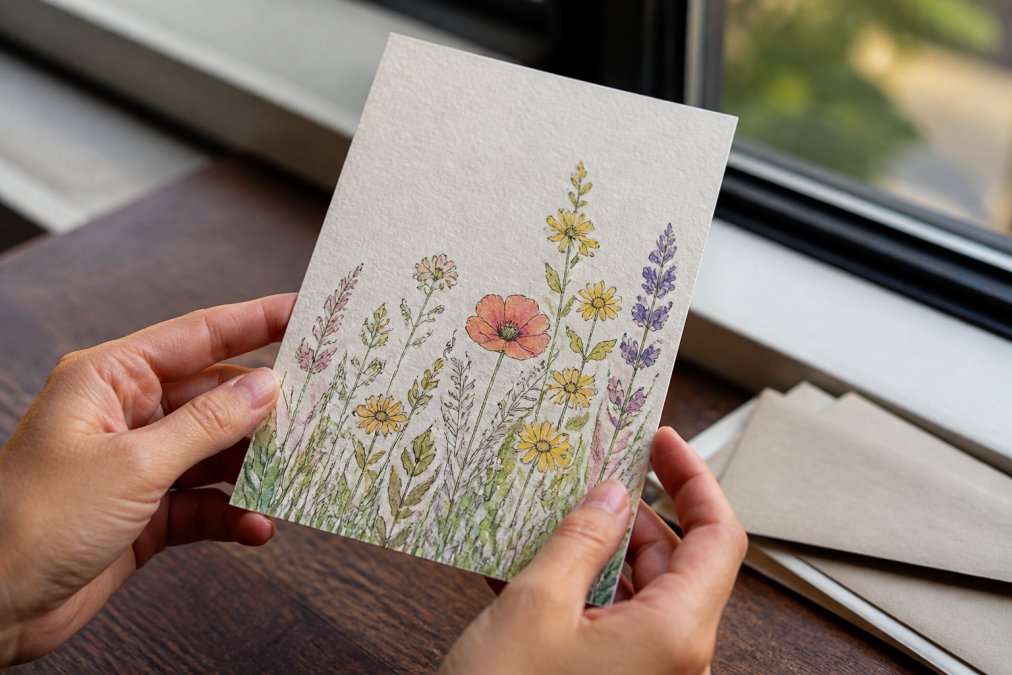
Paper weight and texture. Run your fingers across the card. Quality cardstock has substance and doesn't feel flimsy. Look for heavier paper stock (tappi.org). The texture should be intentional: smooth, linen, or slightly textured.
Print quality. Hold the card up to light and examine the printing. Are the colors crisp and vibrant, or faded and flat? Do the lines feel clean and precise, or blurry? Quality printing means colors stay true and details are sharp.
Envelope quality. A cheap card often comes with a cheap envelope. Quality stationery includes an envelope that matches the card's weight and finish. The envelope should close smoothly and feel substantial.
Design intentionality. Look at how the design uses space. Is there breathing room, or does it feel cluttered? Do the colors work together? Quality designs often use a limited color palette applied thoughtfully. Hand-illustrated cards should show variation in line weight and detail.
Typography. If the card includes text, examine the font. Quality cards use intentional typography that complements the illustration. Hand-lettered text is often a sign of quality because it requires more time and skill.
Finish. Some cards have special finishes, matte, glossy, or foil stamping. These aren't necessary for quality, but when done well, they add dimension. A matte finish often feels more sophisticated than glossy.
The easiest way to spot quality: compare a handmade card from an independent creator to a mass-market card. Hold them side by side. The handmade card will feel heavier, look more detailed, and have personality that the mass-produced card lacks.
Independent vs. Mass-Market Cards: What's the Real Difference
The greeting card industry is split between mass-market cards produced by major publishers and sold in chain retailers, and independent cards created by individual artists and small studios.
Mass-market cards are designed to appeal to the broadest possible audience. They're often generic, safe, and forgettable. They're optimized for speed and cost, printed in huge quantities, and priced competitively. The designs are tested and focus-grouped to ensure they won't offend anyone, which also means they won't delight anyone.
Independent cards come from artists and small studios designing from genuine expression. The designs are often more distinctive, the paper quality is typically better, and the message feels more authentic. Independent creators often hand-pack orders, which adds a personal touch that mass-market operations simply can't replicate.
A mass-market card feels like a commodity. An independent card feels like a choice. When you hand someone a card from an independent creator, you're saying "I found something that actually represents how I feel about you." That's worth the investment.
The best approach is building a collection that includes both. Keep quality independent cards on hand for people who matter most. For situations where you need something quick, mass-market options work fine. But when you want the recipient to feel genuinely seen and appreciated, independent cards deliver that in a way mass-market options never will.
Building Your Card Collection on a Budget
You don't need to spend a fortune to have thoughtful cards on hand for any occasion. The key is being strategic about which cards you stock and buying in small quantities until you find designs you love.
Start with versatile cards. The designs listed above work across multiple occasions, birthdays, thank-yous, congratulations, just-because moments. A single thoughtful card can work for several situations if you write the message to fit the occasion.
Buy in small quantities. When you find a card you love, buy two or three rather than a dozen. This keeps your costs down and prevents cards from feeling stale sitting in a drawer for years.
Keep a running list of occasions you need cards for: birthdays, anniversaries, graduations, thank-yous, get-well, congratulations. Once you know what you're buying for, you can be intentional about selecting cards that work for those specific moments.
Look for cards that work for multiple occasions. A beautiful blank-inside card can be used for birthdays, congratulations, or just-because moments. These multi-purpose cards stretch your budget further.
Consider buying directly from independent creators and small studios. Many offer better pricing when you buy multiple cards, and you're supporting someone's creative practice directly.
The real budget hack: make your own envelopes if you want to save money and add a personal touch. You can decorate simple kraft paper envelopes and add a handmade element that makes even a simple card feel more special.
Building a collection of greeting cards for non-art people is really about giving yourself permission to choose thoughtfully. You don't need an art background to recognize a well-made card or understand why certain designs work better than others. You just need to pay attention to how a card makes you feel when you hold it, and whether it genuinely represents what you want to communicate.
At Cerulean Rooster, we create cards because we believe in the power of expressive, thoughtful design to connect people. Every card is hand-illustrated and hand-packed because we think that personal touch matters. Expressive art is our medium of communication, and as deaf brothers, we pour that perspective into every design. When you choose a card from our collection, you're choosing something that feels genuinely made, not mass-produced. That's the difference between a card someone keeps and one they throw away.
Shop All and find the perfect card for your next occasion.
Frequently Asked Questions
What makes a greeting card feel personal rather than generic?
A personal greeting card goes beyond the printed message. Hand-illustrated designs, thoughtful artwork that matches the recipient's interests, and genuine sentiment in the words you add make all the difference. Cards from independent creators often avoid cliché phrases and mass-market sentiments, instead offering unique perspectives and authentic artistic expression that feels like it was made with that specific person in mind.
How do I write a meaningful greeting card message if I'm not good with words?
Start with a specific memory or quality you appreciate about the person. Instead of generic phrases, mention something concrete: 'I loved when you...' or 'You always make me laugh because...' Keep it short and honest. A few genuine sentences beat a paragraph of flowery language. If you're stuck, describe how the person makes you feel rather than trying to sound poetic. Authenticity matters more than eloquence.
Why are handmade and independent greeting cards better for meaningful connections?
Handmade cards carry the maker's intention and effort. When you buy from independent creators, you're supporting artists who pour personality into their work rather than following mass-market formulas. Each design reflects genuine artistic vision. The recipient can feel that difference. Holding a card created by real hands, packed with care in a small studio, creates a tangible connection that mass-produced alternatives simply can't match.
How do I choose a greeting card when I'm not an art person?
Look for designs that match the recipient's personality or interests rather than focusing on artistic merit. Does the illustration feel fun, thoughtful, or relatable to them? Does the sentiment match the occasion? You don't need to understand design theory to know if a card feels right. Trust your gut: if it makes you smile and think 'that's so them,' it's the right card. Many independent creators design cards with specific personalities in mind, making the choice easier.
What's the difference between independent and mass-market greeting cards?
Independent cards are typically hand-illustrated, produced in smaller batches, and designed by individual artists or small studios. Mass-market cards follow proven formulas with generic sentiments and standardized designs. Independent cards often feature unique aesthetics, avoid clichés, and use higher-quality cardstock and printing methods. They cost more but feel distinctly personal. Mass-market cards are cheaper and convenient, but they lack the authenticity and thoughtfulness that make a gift feel special.
This article was written using GrandRanker