
How to Choose Unique Handmade Greeting Cards
Mitchell AdelmanTable of Contents
- What Makes a Handmade Greeting Card Truly Unique
- How to Commission Personalized Art Cards for Any Occasion
- Custom Greeting Card Ideas That Actually Connect
- Handmade Card Quality Checklist: What to Look For
- Choosing Cards for Every Occasion Without Overthinking It
- Why Handmade Cards Are Worth the Investment
- Conclusion
Last Updated: August 15, 2026
What Makes a Handmade Greeting Card Truly Unique
A truly unique handmade greeting card goes far beyond what you'd find in a mass-produced display at any chain store. It's the difference between a card that sits in a drawer and one that becomes a keepsake someone actually treasures. At Cerulean Rooster, we believe the magic happens when original art, intentional design choices, and genuine human care combine on a single piece of cardstock.

What separates a memorable card from a forgettable one? It starts with the artist's perspective. When someone hand-paints a design or hand-illustrates a concept, they're making thousands of micro-decisions about color, composition, and detail that a printing press simply cannot replicate. Every brushstroke carries intention. The texture of the paper becomes part of the message. The way light hits an embossed element or a pressed flower isn't accidental, it's part of the design language.
The best unique handmade greeting cards tell a story through their visual execution. They use mixed media thoughtfully: layering different paper textures, adding embellishments that feel purposeful rather than cluttered, choosing typography that matches the emotional tone of the message. A card that celebrates a promotion might feature bold, confident lettering and a color palette that energizes. A sympathy card might use softer textures, muted tones, and delicate calligraphy to convey tenderness.
How to Commission Personalized Art Cards for Any Occasion
Commissioning a custom greeting card means working directly with an artist who understands your vision and can translate it into something tangible. The process is more straightforward than many people assume, and it opens up possibilities that off-the-shelf cards simply cannot offer.
Start by identifying what you actually need. Are you looking for a one-time card for a specific milestone, or do you want a design you can reorder? Do you need the card to arrive by a certain date, or do you have flexibility? Being clear about your timeline and quantity matters because it shapes what's realistic and what the artist can deliver. A single commissioned card has a different turnaround than a small batch of identical designs.
Next, gather visual references that capture the feeling you want. This doesn't mean you need a finished design, it means collecting images, color combinations, artistic styles, or even just descriptive words that resonate with you. If you love a certain artist's style, save examples. If you want a particular color palette, screenshot it. If you're commissioning a card for someone who loves a specific hobby or aesthetic, bring reference images of that too. The more visual language you can share, the better the artist can understand your direction.

When you reach out to commission, be specific about what makes this card personal. Is it celebrating a specific person's achievement? Commemorating a relationship milestone? Expressing something that standard cards don't quite capture? Artists thrive on understanding the emotional context. That context becomes the foundation for a design that actually resonates.
Custom Greeting Card Ideas That Actually Connect
The cards that people keep aren't the ones that simply say "Happy Birthday." They're the ones that make someone feel truly seen. Custom greeting card ideas work best when they reflect something genuine about the relationship or the occasion.
For milestone moments, consider cards that capture a specific inside joke or shared memory. A card celebrating a friend's new job could feature an illustration of them in their new role, drawn with humor and personality. A wedding card might incorporate elements from the couple's love story, their favorite place, their pet, the way they met, woven into the design. These details transform a card from generic to genuinely meaningful.
Personalization works differently depending on the relationship. For close friends and family, you can go bold and specific. For professional relationships, the personalization might be subtler, perhaps a card that references a shared project or inside knowledge about what the recipient values. For new relationships or acquaintances, personalization through thoughtful design choices (color, artistic style, tone) can feel warm without being presumptuous.
Seasonal and occasion-specific designs offer another angle. Instead of a generic "Congratulations" card, what about a design that celebrates what they're actually congratulating someone for? A promotion card with a different visual language than a new baby card. A sympathy card that acknowledges grief with beauty rather than cliché. These distinctions matter because they show you thought about the specific moment, not just the generic occasion.
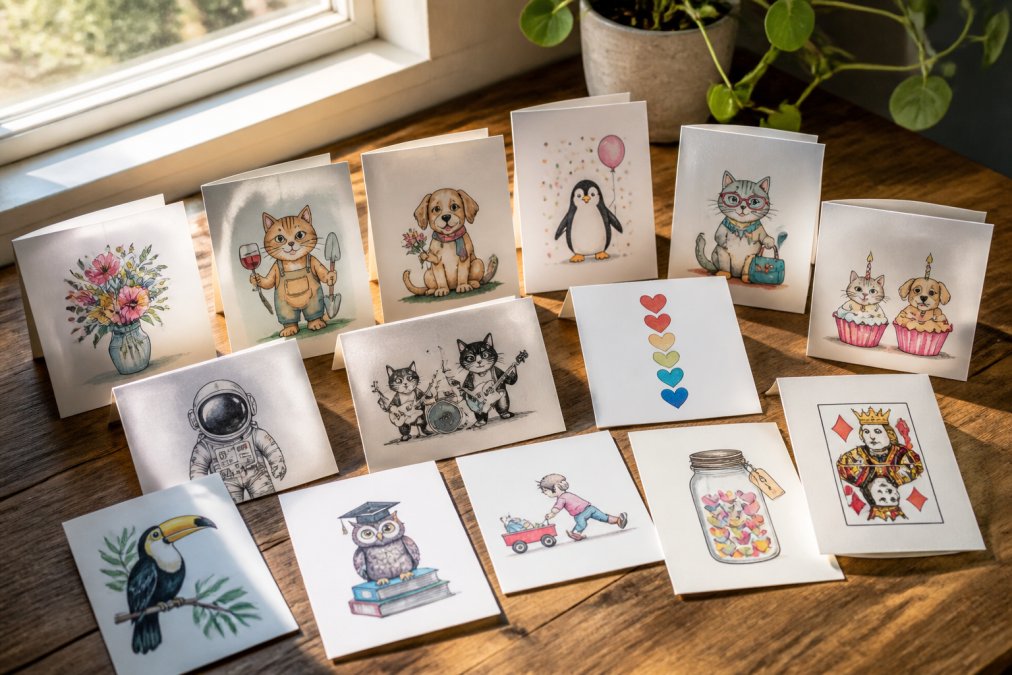
One powerful approach is to commission cards that reflect the recipient's aesthetic or interests. If someone loves botanical themes, a card featuring hand-painted botanicals becomes a small piece of art they'll want to display. If they collect vinyl stickers or love illustrative design, a card that incorporates those elements feels like it was made specifically for them, because it was.
Handmade Card Quality Checklist: What to Look For
When you're evaluating whether a unique handmade greeting card is worth your investment, several markers indicate genuine quality and care.
Paper Quality and Texture
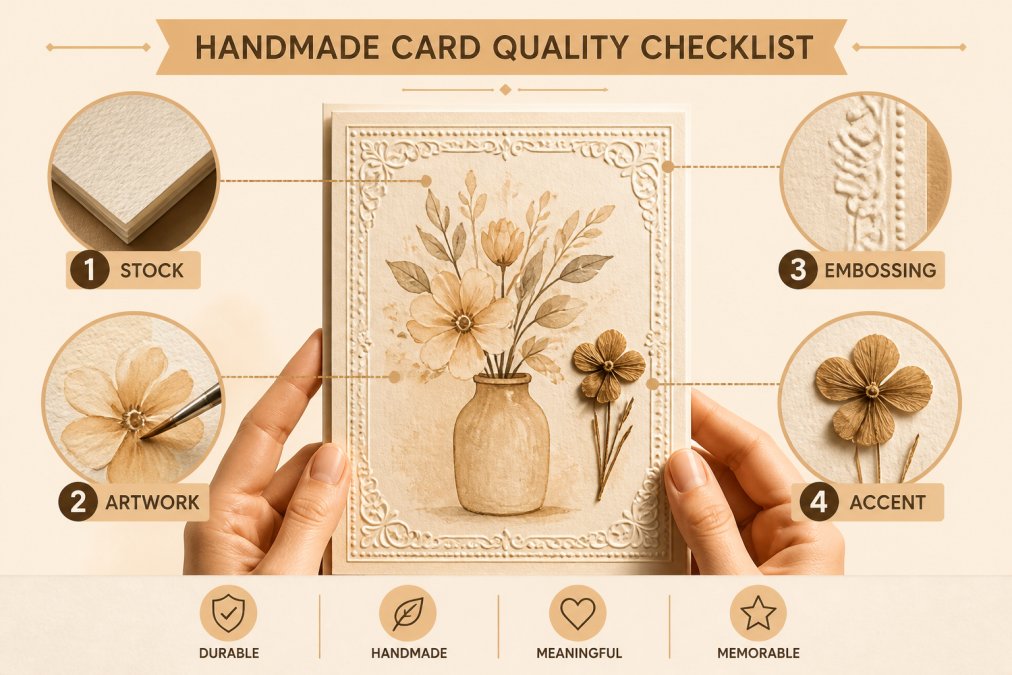
The cardstock itself tells you a lot about the care that went into the card. Quality handmade cards use substantial paper, something with weight and presence, not flimsy stock that feels cheap. Run your fingers across the surface. Can you feel the texture? Is there variation in the paper, or does it feel uniformly smooth in a way that suggests mass production?
The best cardstock for handmade cards has tooth, a slight texture that catches light and gives the paper character. Pressed flowers, embossing, and hand-painted details all show up better on paper with texture because the surface has dimension. When you hold a quality card up to light, you should be able to see the paper's integrity. Thin, translucent cardstock suggests corners were cut. Substantial, opaque paper suggests the artist invested in materials that will last.
Color also matters. Hand-painted designs on quality cardstock show color depth that printed versions struggle to match. The pigment sits on the surface with richness. If the card uses layered paper, different cardstock weights or textures stacked together, that's a sign of intentional design and craft.
Design Execution and Artistic Details
Look at how the design actually sits on the card. Are the lines clean and intentional, or do they feel rushed? Hand-painted elements should show control and confidence, even if the style is loose or expressive. Embossing should be crisp and even. Stamping should be aligned and clear. Typography, whether calligraphy or printed lettering, should support the overall design rather than compete with it.
Quality cards show visual hierarchy. The most important element draws your eye first. Secondary elements support without overwhelming. Negative space (empty areas) is used intentionally, not as a default. The composition feels balanced, whether that balance is symmetrical or asymmetrical.
Mixed media elements should feel integrated, not haphazard. If a card uses pressed flowers, embellishments, or layered elements, they should be secured thoughtfully and positioned with purpose. A single well-placed pressed flower creates impact. Flowers scattered randomly feel like the artist wasn't sure what they were doing.
Personalization and Packaging
When a card is truly personalized, whether it's a commissioned piece or a limited-edition design that reflects someone's specific situation, that intention shows in every detail. The message inside should feel like it was written for this specific card and recipient, not a generic sentiment that could apply to anyone.
Packaging matters more than people realize. How the card arrives tells you something about the maker's values. Cards packed with care, wrapped thoughtfully, and presented as something special arrive feeling like a gift before it's even opened. This is where small operations like Cerulean Rooster shine. Every order is packed by hand in the studio, which means your card arrives with the same attention to detail that went into creating it.
The envelope should match the card's quality. A beautiful card in a cheap envelope undermines the whole experience. The best handmade card experiences include envelopes that feel intentional, whether that's kraft paper, colored stock, or something with texture that complements the card design.
Choosing Cards for Every Occasion Without Overthinking It
The beauty of unique handmade greeting cards is that they work for nearly any occasion when you match the right card to the right moment. The key is not overthinking the selection process.
For celebrations, birthdays, promotions, new homes, engagements, look for cards with energy and color. You want something that feels joyful and optimistic. The design should reflect the specific thing being celebrated if possible. A promotion card should feel different from a birthday card, even if both are celebratory.
For sympathy and difficult moments, choose cards that acknowledge the weight of the occasion without being maudlin. The best sympathy cards offer quiet beauty, something that says "I'm thinking of you" without trying to fix what can't be fixed. Muted color palettes, soft textures, and simple, genuine messages work best here.
For relationships and connection, thank you cards, friendship cards, "just because" cards, the personalization becomes central. These are opportunities to tell someone specifically why they matter to you. A card that references a shared memory, an inside joke, or something unique about the relationship lands differently than a generic sentiment.
For professional occasions, client appreciation, employee recognition, business milestones, the card should reflect the professional tone while still feeling personal. It's a balance between polish and genuine warmth. A card from Cerulean Rooster that features original art and thoughtful design strikes that balance naturally because the artistry elevates it beyond corporate standard, while the quality and presentation keep it appropriate for professional contexts.
Why Handmade Cards Are Worth the Investment
This is the question that stops many people: Why spend more on a handmade card when you can grab something for a couple dollars at any store?
The answer comes down to what a card actually is. A mass-produced card is a commodity, something you buy because you need something to write a message on. A unique handmade greeting card is a small piece of art that carries your message. It's a physical representation of how much the recipient matters to you. It says, "I didn't grab the closest option. I chose something specific because I was thinking about you."
People keep handmade cards. They don't end up in a drawer with fifty other identical cards. They get displayed, saved, returned to. Years later, someone might pull out a handmade card they received and remember exactly who gave it to them and how it made them feel. That's not something a mass-produced card does.
There's also something meaningful about supporting artists and small creators. When you buy a handmade card from a family-run studio like Cerulean Rooster, you're supporting actual people who care about their craft. You're choosing to invest in original art rather than mass production. You're saying that authenticity and artistry matter to you.
The quality difference is tangible. Better paper, hand-painted details, thoughtful design, careful packaging, these things cost more because they require skill, time, and investment in materials. But that quality is what makes the card feel special when it arrives and what makes it worth keeping.
Consider the economics differently. A unique handmade greeting card might cost more upfront, but it delivers more value in the moment and more lasting impact. It becomes a keepsake rather than something disposable. For milestone moments, important relationships, and occasions that matter, that investment makes complete sense.
Choosing unique handmade greeting cards means prioritizing authenticity and artistry over convenience. When you select a card from Cerulean Rooster, you're getting original hand-painted designs, substantial cardstock that feels substantial in your hands, and the knowledge that every order is packed with personal care by the artists themselves. Whether you're commissioning a custom piece or selecting from existing designs, you're investing in something that will actually be treasured. Explore the collection of cards and discover designs that feel made specifically for the moments that matter most to you.

Frequently Asked Questions
How can I tell if a handmade greeting card is actually high quality?
Look for thick, textured cardstock that feels substantial in your hands, not flimsy or thin. Check the artwork for clean lines, consistent color application, and thoughtful details like hand-painted elements, embossing, or mixed media touches. Quality handmade cards also show attention to composition and visual balance, with intentional spacing and typography. The packaging and presentation matter too; cards that arrive carefully protected signal that the maker cares about the full experience.
What should I consider when choosing a custom greeting card for a specific occasion?
Think about the recipient's personality and what they'd genuinely appreciate, not just the occasion itself. Does the card's aesthetic match their style? Consider the color palette, artistic theme, and tone. For meaningful moments like birthdays or milestones, a bespoke design that reflects something personal about them creates a deeper connection. Match the card's formality and personality to the relationship and occasion; a playful design works for close friends, while something more refined suits professional settings.
How do I know if a handmade card maker is trustworthy and will deliver quality work?
Check how they describe their process, do they explain how cards are made and packed? Trustworthy makers are transparent about materials, turnaround times, and customization options. Read customer feedback about whether cards arrived as expected and if personalization truly felt thoughtful. Small, family-run studios that hand-pack every order often show genuine care. Ask about their return or adjustment policy; reputable makers stand behind their work and respond to concerns.
What's the difference between buying a pre-made handmade card and commissioning a personalized one?
Pre-made handmade cards offer unique designs that are still crafted with intention and care, perfect when you need something quickly or want an existing design that speaks to you. Commissioning a custom card takes personalization further, allowing you to request specific themes, colors, or details that make it truly one-of-a-kind for the recipient. Custom work typically takes longer but results in something that feels deeply personal and tailored to the moment or person.
This article was written using GrandRanker