
Unique Illustration Art for Home Offices: 10 Ideas
GrandrankerTable of Contents
- Why Unique Illustration Art Transforms a Home Office
-
10 Types of Illustration Art for Your Home Office
- 1. Original Hand-Drawn Illustrations
- 2. Abstract and Geometric Shapes
- 3. Botanical and Biophilic Prints
- 4. Figurative and Portrait Illustrations
- 5. Minimalist Line Art
- 6. Quirky and Surreal Illustration Prints
- 7. Typographic and Quote-Based Art
- 8. Vintage and Retro Illustration Styles
- 9. Multi-Panel Canvas and Gallery Wall Sets
- 10. Custom and Personalized Illustrations
- Best Art Styles for Productivity and Focus
- How to Frame Illustration Art for a Professional Look
- How to Arrange Wall Art in a Home Office
- Where to Buy Unique Art Prints That Support Independent Artists
- Conclusion
Last Updated: August 12, 2026
Why Unique Illustration Art Transforms a Home Office
Unique illustration art signals intention in ways generic decor cannot. The art you choose shapes how you think, feel, and how others perceive your professional space during video calls.
At Cerulean Rooster, we create original illustrations that bring genuine warmth and personality into everyday spaces. The difference between an inspiring workspace and a forgettable one often comes down to a single well-chosen piece on the wall. Below, we'll walk through ten distinct illustration art styles, explain which ones support focus and creativity, and show you how to hang and frame them for maximum impact.
According to research published by the American Psychological Association on environment and cognition, the visual environment has a measurable effect on cognitive performance and mood. Art isn't decoration, it's an active part of your workspace design.
10 Types of Illustration Art for Your Home Office
Illustration art is broad and versatile for home office decor. The ten styles below cover everything from bold originals to minimalist line drawings, offering a genuine fit for every aesthetic and working style.
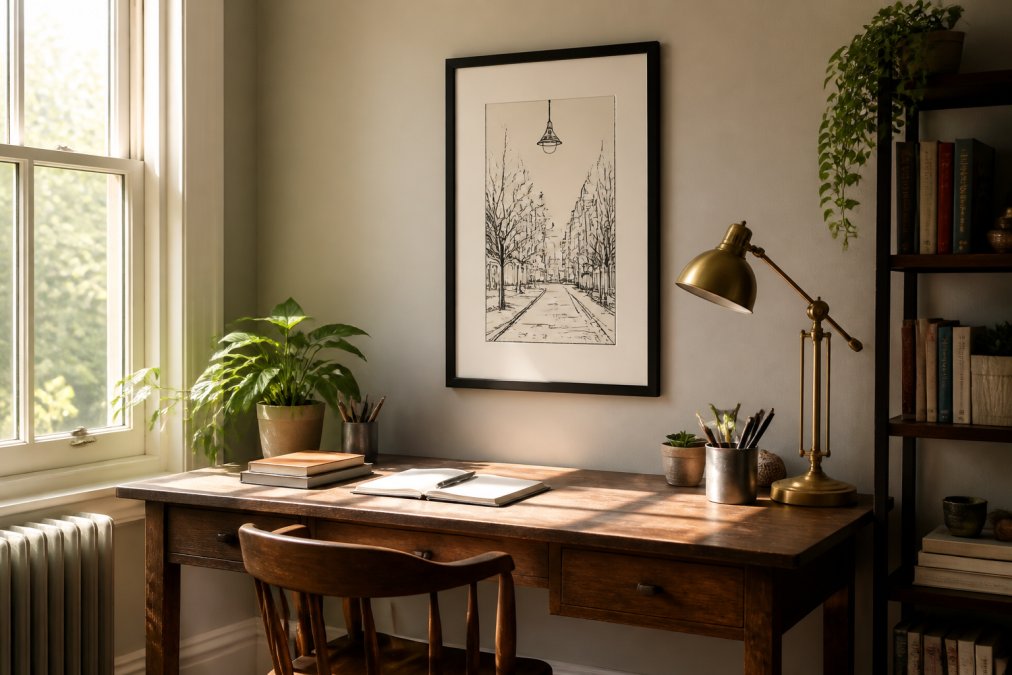
1. Original Hand-Drawn Illustrations
Nothing compares to original hand-drawn work. The visible texture of ink on paper, slight imperfections in line weight, and the sense that a real human made this piece give a workspace authenticity that digital prints can't replicate. Original hand-drawn illustrations work especially well as a focal point above a desk, inviting closer inspection and conversation during video calls. The drawback: originals cost more than reproductions and are one of a kind.
Cerulean Rooster creates original illustrations by hand, with every piece reflecting the individual sensibility of the artists. As a deaf-owned studio run by two brothers, the work carries a perspective that mass-produced art simply doesn't have.
2. Abstract and Geometric Shapes
Abstract and geometric illustration art is the most versatile category. Clean angles, repeating patterns, and bold color blocks work in both minimalist and maximalist spaces without competing with furniture or other visual elements. Geometric shapes are also neutral enough to stay relevant as your office style evolves.
3. Botanical and Biophilic Prints
Biophilic design brings natural elements into built environments. Botanical illustration art achieves this effect without requiring live plants or natural light. Detailed drawings of leaves, stems, flowers, and root systems connect the eye to organic forms, which many find calming during long work sessions.
According to WELL Building Standard guidelines on biophilic design, incorporating nature-based visual elements into workspaces supports cognitive restoration and reduces mental fatigue. Framed botanical prints look particularly strong in warm-toned offices paired with natural wood furniture and linen textiles.
4. Figurative and Portrait Illustrations
Figurative illustration art brings emotional warmth into a space that purely abstract work can't achieve. A well-rendered portrait or figure study creates presence without being literal or photographic. Look for figurative illustrations where the expression is contemplative rather than demanding attention.
5. Minimalist Line Art
Minimalist line art is the most forgiving style. Single-line drawings and sparse compositions work in virtually any space because they don't compete with surroundings. This style is especially effective in small home offices where wall space is limited.
6. Quirky and Surreal Illustration Prints
Surreal and quirky illustration prints are the most personality-forward choice. Think unexpected juxtapositions and dreamlike imagery that signals creativity and unconventional thinking. The tradeoff is that surreal art is polarizing and can generate strong reactions during video calls.
7. Typographic and Quote-Based Art
Typographic art sits at the intersection of illustration and language. Hand-lettered quote prints feel personal, while mass-produced motivational posters feel corporate. Look for work where the letterforms themselves are the art.
8. Vintage and Retro Illustration Styles
Vintage illustration styles, particularly mid-century commercial art and travel posters, bring a sense of history and craft to a workspace. These styles work well in warm-toned spaces with wooden furniture and earthy color palettes.
9. Multi-Panel Canvas and Gallery Wall Sets
Multi-panel canvas art and curated gallery wall sets fill large walls without relying on a single oversized piece. A set of three or five coordinated illustration prints creates a cohesive visual statement. Gallery wall sets work best when prints share a common thread: consistent color palette, unified style, or connected theme.
10. Custom and Personalized Illustrations
Custom illustration art is the most meaningful option. A piece created specifically for you transforms a wall from decoration into biography. Custom work takes more time and costs more than off-the-shelf prints, but the result is genuinely one of a kind.
| Art Style | Best For | Workspace Vibe | Complexity to Place |
|---|---|---|---|
| Original Hand-Drawn | Statement piece, focal point | Warm, artisan | Low |
| Abstract & Geometric | Versatile, any style | Modern, clean | Low |
| Botanical & Biophilic | Calm, focused work | Natural, grounded | Low |
| Figurative & Portrait | Emotional warmth | Expressive, personal | Medium |
| Minimalist Line Art | Small spaces, beginners | Minimal, airy | Very low |
| Quirky & Surreal | Creative, unconventional spaces | Bold, distinctive | Medium |
| Typographic | Motivation, personal values | Purposeful | Low |
| Vintage & Retro | Warm, character-rich spaces | Nostalgic, layered | Medium |
| Multi-Panel Sets | Large walls, gallery look | Curated, cohesive | Medium |
| Custom & Personalized | Meaningful, one-of-a-kind | Personal, unique | Low |
Best Art Styles for Productivity and Focus
The most productive art for a home office engages without overwhelming. Abstract and botanical styles perform well because they give the eye somewhere to rest without demanding active interpretation. Figurative and surreal work, while compelling, can pull attention away from tasks.
Psychology of Color and Imagery in Your Workspace
Color is the single most underestimated variable in home office decor. Blue tones are associated with calm and concentration, making them strong for analytical work. Warm yellows and oranges stimulate energy and creativity, suiting brainstorming but potentially fatiguing over long periods. Greens, particularly muted natural greens in botanical prints, are associated with restoration and reduced mental fatigue.
Imagery matters as much as color. Open landscapes and organic forms support spaciousness, especially valuable in small or windowless offices. Dense, complex imagery can feel stimulating briefly but draining over a full workday.
How to Frame Illustration Art for a Professional Look
Framing illustration art correctly is the difference between a considered design choice and an afterthought. The frame is not neutral, it's an active part of the composition.
For most illustration art, a simple frame in black, white, or natural wood serves the work better than ornate framing. Thin metal frames work well for minimalist and geometric prints. Wider wood frames suit vintage and botanical styles. Matting adds visual breathing room; white or off-white is almost always correct for illustration art.
Lighting and Placement Considerations
Lighting is where most home office art arrangements fall short. A beautiful print hung in shadow is wasted.
Natural light is ideal but inconsistent. A dedicated picture light mounted above the frame or adjustable track light aimed at the piece makes a significant difference. Warm-white bulbs in the 2700K-3000K range render colors in illustration art more accurately.
Hang art so the center sits at approximately 57-60 inches from the floor, corresponding to average eye level. On a wall behind a desk, adjust slightly higher for seated viewing during video calls. Avoid placing prints directly opposite windows, where glare makes them invisible during daylight.
How to Arrange Wall Art in a Home Office
The most effective gallery wall arrangements follow a clear organizing principle before hanging anything. Lay all pieces on the floor in your intended configuration, photograph it, and live with the photo for a day before committing.
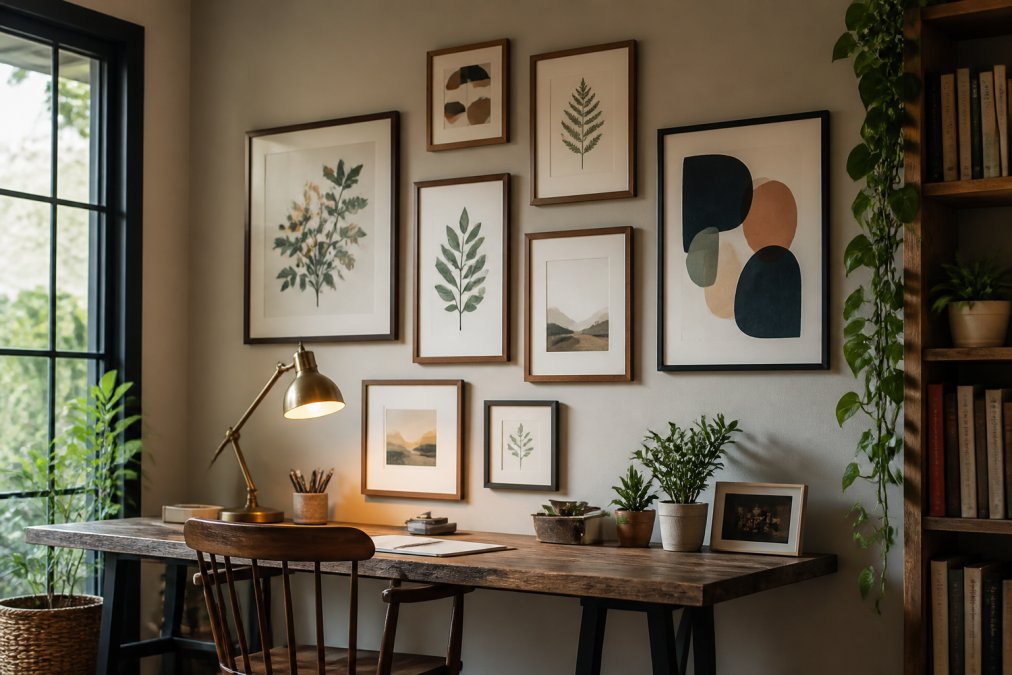
For a single large illustration, center it above the primary piece of furniture it relates to, typically the desk. For multiple pieces, these approaches work reliably:
- Grid arrangement: Uniform frames in a tight grid. Works best with illustration art sharing a consistent color palette.
- Salon-style: Mixed sizes and frames arranged asymmetrically. Works best with a clear anchor piece at center.
- Linear row: Two or three pieces at the same height in a horizontal line. Works best in narrow spaces.
The biggest mistake is hanging pieces too far apart. Most arrangements benefit from 2-3 inches of space between frames. Tighter groupings read as intentional; wider spacing reads as uncertainty.
Where to Buy Unique Art Prints That Support Independent Artists
The best place to buy unique illustration art is directly from independent artists and small studios. When evaluating sources, prioritize transparency about artists, original or limited-edition work rather than mass-produced reproductions, and clear quality and return policies.
For hand-illustrated work carrying genuine human expression, Cerulean Rooster offers pieces created by two brothers whose artistic perspective is shaped by a life lived differently. Every order is packed by hand in their small studio.
According to Americans for the Arts research on art and well-being, supporting working artists has documented benefits for both buyer and the broader creative ecosystem. Buying directly from small studios keeps that ecosystem healthy.
Filling a home office with art that means something takes more intention than most people give it. The styles in this list cover the full range from safe and versatile to bold and personal. The right choice depends on how you work, what you value, and how much of yourself you want your workspace to reflect. For original illustration art created by hand with genuine care, explore the collection at Cerulean Rooster, where every piece is an expression of two artists who put their whole perspective into what they make.
Frequently Asked Questions
How do you choose illustration art for a home office?
Start with your office's color palette and overall aesthetic, minimalist spaces suit clean line art or muted botanical prints, while eclectic setups can handle bold, quirky illustration prints. Think about what you want the art to do: calm you, spark creativity, or signal professionalism on video calls. Original or limited-edition illustration art from small studios tends to feel more personal than mass-produced prints, and that sense of connection to the work matters more than most people expect.
Does wall art actually increase productivity in a home office?
Research in environmental psychology suggests that visual stimulation in a workspace can reduce mental fatigue and improve mood, both of which support sustained focus. Art with natural imagery, botanicals, landscapes, organic shapes, aligns with biophilic design principles shown to reduce stress. Abstract art in blues and greens is commonly associated with calm concentration, while warmer tones and energetic compositions can lift motivation. The key is choosing art that resonates personally rather than defaulting to generic decorating ideas.
What kind of illustration art works best in a professional workspace?
For a professional workspace visible on video calls, framed prints with clean lines, a restrained color palette, and a clear focal point tend to read well on camera. Abstract art, minimalist illustration prints, and contemporary geometric designs all project a polished aesthetic without feeling sterile. If your work is creative, original hand-drawn illustrations or expressive figurative art can reinforce your personal brand. Avoid overly busy gallery walls directly behind your seat, a single statement piece or a tightly curated two- or three-print arrangement works better.
Where can I buy unique, independent illustration art?
Small creative studios like Cerulean Rooster offer original illustration art packed by hand, making each piece feel genuinely personal. Curated marketplaces such as Minted, 20x200, and Tappan Collective feature limited-edition prints from independent artists. For the broadest range of styles and budgets, platforms connecting buyers directly to artists give you access to original paintings, linocuts, and mixed-media works. Prioritize sellers who are transparent about their process, hand-packed orders and artist-run studios are reliable signals of quality and authenticity.
How should I arrange illustration prints in a small home office?
In a small office, a single large-format illustration print used as a focal point usually reads better than a crowded gallery wall. If you want multiple pieces, keep frames consistent in finish and limit the arrangement to two or three prints hung at eye level. Vertical arrangements draw the eye upward and make ceilings feel higher. Leave at least 5 to 8 centimeters between frames for visual breathing room. Leaning smaller framed prints on a shelf is a low-commitment option that lets you rotate your curated collection without putting holes in the wall.
This article was written using GrandRanker