
How to Support Independent Creative Studios in 2026
Mitchell AdelmanTable of Contents
- Why Independent Creative Studios Need Your Support
- The Benefits of Buying from Independent Artists
- How to Promote Small Creative Businesses on Social Media
- How to Write a Review for a Small Business
- Financial Support and Micro-Investing in Creativity
- Ethical Collaboration and Fair Pay Practices
- Conclusion: Building a Creative Community
- Frequently Asked Questions
Last Updated: September 8, 2026
Independent creative studios are the heartbeat of original design, yet they often operate with fewer resources and less visibility than larger agencies. Supporting these studios means choosing art that carries a human story over mass-produced goods. At Cerulean Rooster, a family-run studio owned by two deaf brothers, we believe that every purchase, share, and review can sustain a creative practice. This guide explores practical ways to support independent creative studios, from buying original pieces to building ethical partnerships.
Why Independent Creative Studios Need Your Support
The biggest challenge facing small studios isn't a lack of talent; it's a lack of consistent, predictable income. When you buy from a large retailer, your money funds a marketing machine. When you buy from an independent studio, your money directly fuels rent, materials, and the artist's time.
A common mistake is assuming that only large commissions matter. In reality, a steady stream of small purchases, like greeting cards or art prints, provides the financial foundation that allows artists to take creative risks. This kind of support creates a direct line between the buyer and the creator, fostering a relationship that feels personal rather than transactional.
The Benefits of Buying from Independent Artists
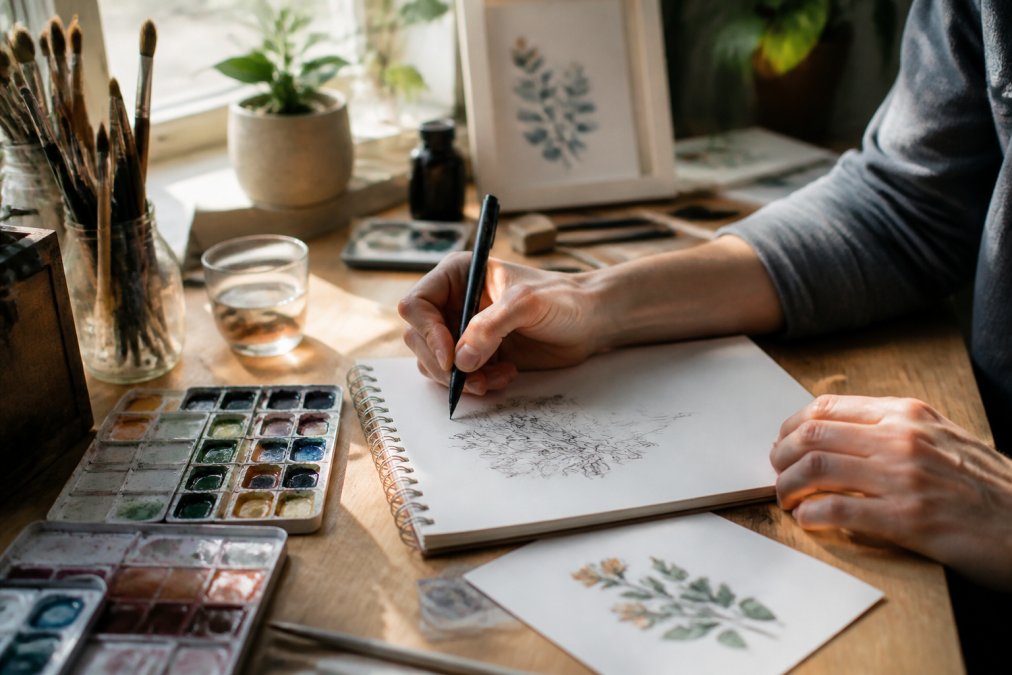
Buying from independent artists delivers value that extends far beyond the physical product. You acquire a piece with a narrative, an original expression that cannot be replicated by a factory line. These items often become conversation starters and cherished keepsakes because they carry the distinct voice of their maker.
The benefits of buying from independent artists also include a more ethical shopping experience. Many conscious consumers prefer supporting deaf-owned and family-run small businesses, knowing their money supports a specific household rather than a faceless corporation. When you purchase original artwork, like a hand-painted watercolor, you are investing in a skill that has been honed over years, not mass-produced in seconds.
How to Promote Small Creative Businesses on Social Media
Most guides stop at "like and share," but that only scratches the surface. Real support means acting as a digital community builder, someone who actively connects a studio's work to the people who will genuinely appreciate it. This is especially powerful for independent studios like Cerulean Rooster, where expressive art is our medium of communication as deaf brothers. When you amplify our work, you're not just boosting a post; you're helping a visual language reach a wider audience.
The Amplification Framework: Beyond the Double-Tap
Think of your role as a bridge, not a megaphone. A megaphone broadcasts; a bridge connects. Here is a practical framework to move from passive consumer to active community advocate:
- The Curated Story Share. Instead of resharing a post to your story with a generic "Love this," create a mini-curation. Take a screenshot of the artist's work, add a text overlay explaining why it resonates with you (e.g., "The texture on this watercolor reminds me of fall in New England"), and then tag the studio. This provides context and a personal testimonial that feels authentic to your audience.
- The Contextual Tag. Don't just tag a friend in the comments. Send them a direct message with a link to the specific piece you think they'd like. Include a personal note, such as, "This Fall Jack Original Art piece has the exact color palette you've been looking for." A direct, personal recommendation is far more likely to convert into a sale than a public, untargeted tag.
- The First-Hour Engagement Pod. Algorithms prioritize content that gains traction quickly (newsroom.fb.com). If you see a studio post something new, engage within the first hour. A like, a thoughtful comment, and a save within that window signals to the platform that the content is high-quality and relevant, pushing it to a broader feed. Coordinate with a small group of friends who also appreciate indie art to do the same.
- The SEO Backlink. If you have a blog, website, or newsletter, link to the studio's site. For example, a simple mention like, "I found this incredible deaf-owned studio, Cerulean Rooster, that creates expressive portraits," provides a valuable backlink that improves their search ranking and drives direct traffic.
The Unique Angle: Advocating for Accessibility and Representation
When you share a studio's story, like that of two deaf brothers running a family business, you're also promoting a narrative of inclusive entrepreneurship. Your shares help normalize and celebrate diverse business ownership. You can amplify this by using relevant hashtags like #DeafOwned, #SmallBusinessSaturday, or #ArtistsOnInstagram, which help niche communities discover the studio.

By shifting from passive liking to active, contextual promotion, you become a genuine partner in the studio's growth. You are not just a consumer; you are a node in a network that helps a creative business survive and thrive in a crowded digital ecosystem.
How to Write a Review for a Small Business
Reviews are the digital currency of trust for small businesses (business.trustpilot.com). A detailed review not only validates the studio for potential customers but also improves their search engine ranking, making them easier to find. If you have purchased a product and loved it, taking five minutes to write a review is a powerful act of support.
When you write a review for a small business, focus on specifics rather than generic praise. Mention the quality of the materials, the accuracy of the product compared to the online description, and the speed of shipping. For handmade items, note the craftsmanship, perhaps the precision of an ink illustration or the texture of the paper.
Financial Support and Micro-Investing in Creativity
Beyond direct purchases, there are deeper ways to support independent creative studios through financial mechanisms like micro-investing. This doesn't require venture capital; it involves consistent, small-scale financial commitments that provide stability for the creator.
Many studios offer original art at accessible price points to make collecting feasible. For example, Cerulean Rooster offers original watercolor pieces like the Winter Queen Original Art or Fall Jack Original Art, which allow buyers to start a collection without a massive investment. Similarly, purchasing a Spring King Original Art piece supports the studio's ongoing creative output.


Ethical Collaboration and Fair Pay Practices
Ethical collaboration is more than just paying on time; it's about respecting the creative process and the business realities of an independent studio. For a small, family-run business like Cerulean Rooster, where expressive art is our medium of communication as deaf brothers, a fair collaboration means our time, materials, and unique perspective are valued. It's a partnership built on mutual respect, not a client-vendor transaction.
The Scoping Conversation: Getting Specific
The most common breakdown in creative partnerships happens before any work begins. Vague requests lead to vague results and scope creep. An ethical collaboration starts with a detailed scoping conversation. Instead of saying, "I want a portrait of my dog," a respectful client approaches us with specifics: "I want a watercolor portrait of my golden retriever, mid-action catching a ball, in a style similar to your Fall Jack piece, sized to fit an 8x10 frame."
Here is a practical checklist to guide that initial conversation:
- Reference Materials: Provide clear, high-resolution photos. For a pet portrait, include shots that show their personality and distinct markings.
- Style Direction: Point to specific pieces in the studio's portfolio. Saying "I love the texture in this piece" is more helpful than "make it look nice."
- Intended Use: Be upfront about where the art will live. Will it be a personal gift, a website hero image, or a product label? This affects licensing and pricing.
- Timeline & Budget: State your ideal deadline and your budget range. This transparency allows the studio to tell you if the project is feasible or if the scope needs adjusting.
The Contract: Protecting Both Sides
A contract isn't a sign of distrust; it's a sign of professionalism. It protects the studio from scope creep and the client from miscommunication. A solid agreement should clearly outline:
- Deliverables: Exactly what will be delivered (e.g., one final high-resolution digital file, one physical watercolor painting).
- Revision Schedule: How many rounds of revisions are included? Typically, a commission includes a set number of revision rounds to refine the piece.
- Payment Terms: A common ethical practice is a 50% deposit to secure the commission and cover initial materials, with the balance due upon approval (artsy.net).
- Copyright & Usage: Who owns the final piece? Does the client have the right to reproduce it? For a personal portrait, the client usually owns the physical art but not the copyright to reproduce it commercially. This should be explicit.
The Trade-Off: Speed vs. Specificity
There is a trade-off between a quick, generic commission and a slower, highly specific one. A client who wants a portrait in three days for a last-minute gift might have to accept a less detailed background or a simpler composition. A client who can wait three weeks allows the artist to layer watercolors, perfect the lighting, and capture a true likeness. Ethical collaboration means understanding this trade-off and not demanding the speed of a fast-fashion purchase from a fine-art studio.
By embracing these practices, you help prevent the burnout that plagues so many independent creators. You ensure that the studio can continue to do what it does best: create expressive, personal art that communicates in ways words sometimes cannot.
Conclusion: Building a Creative Community
Supporting independent creative studios requires a shift from passive consumption to active participation. It is about choosing to spend money in ways that align with your values and using your platform to amplify voices that might otherwise be drowned out.
The goal is to build a creative community where art is valued for its expression, not just its utility. Whether you are buying a handmade card or commissioning a portrait, you are telling the artist that their vision matters. To see how expressive art serves as a medium of communication, explore the hand-packed goods from Cerulean Rooster and find a piece that speaks to you.
Independent creative studios thrive when they are woven into the fabric of daily life, not treated as an afterthought. By prioritizing ethical collaboration, fair pay, and genuine promotion, you help ensure that original voices continue to be heard. Cerulean Rooster embodies this spirit through its expressive, handcrafted art and stickers, crafted by two deaf brothers who pour their hearts into every order. Get started with Cerulean Rooster and bring a piece of genuine, human-centered design into your world.
Frequently Asked Questions
What is the best way to support independent creative studios?
The most direct way to support independent creative studios is to buy their work. Purchasing original art, prints, or handmade goods puts money directly into the artist's hands, unlike buying from mass retailers. Beyond purchases, you can help by following their social media accounts, engaging with their posts, and recommending them to friends. Small actions like sharing a studio's work with someone who might love it can lead to new customers and long-term creative partnerships.
How can I help a small creative business grow without spending money?
You can help a small creative business grow for free by promoting them on your social media. Share their posts to your stories, tag them in relevant conversations, and write a thoughtful review on Google or their website. Word-of-mouth recommendations are incredibly valuable for small studios. You can also offer your skills, like helping with a website or taking photos, if you have relevant expertise. These actions build community and visibility without costing you a cent.
Why is it important to support independent creative studios?
Supporting independent creative studios keeps original art and handmade goods alive. When you buy from a small studio, you are not just buying a product; you are investing in a person's creative vision and supporting a small business, often a family-run operation. This support allows artists to continue making expressive, human-made work instead of being forced into mass production. It also enriches your community by keeping creative talent local and fostering genuine connections between makers and buyers.
What does it mean to support 'human-made' art?
Supporting 'human-made' art means valuing the imperfections and personal touch that come from a piece created by hand. Unlike mass-produced items, human-made art carries the artist's energy, decisions, and story. When you purchase a handmade original, like a watercolor painting or a hand-packed sticker, you are connecting with another person's expression. This type of support ensures that traditional skills and personal artistry continue to thrive in a world of digital replication.